- Key Takeaways
- The Unseen Risks
- Your Comprehensive Used Truck Inspection
- Alberta’s Harsh Realities
- Decoding Diagnostic Reports
- From Inspection to Negotiation
- Choosing Your Inspector
- Conclusion
- Frequently Asked Questions
- Why is a used truck inspection so important before buying?
- What should a comprehensive used truck inspection include?
- How does Alberta’s climate affect used trucks?
- How do I understand a diagnostic report from a used truck inspection?
- Can I use the inspection report to negotiate the truck price?
- Should I trust the seller’s inspection, or hire my own inspector?
- How do I choose a qualified used truck inspector?
Key Takeaways
- Used truck inspection. Always be sure to do a full used truck inspection before purchase to protect yourself from surprise repairs, hidden damage, and surprise legal or financial issues. Use a comprehensive checklist and ask for a written inspection report with photos and mechanic notes to help make an educated decision.
- Check the paper trail to verify the truck’s history and ownership. Cross reference vehicle history and provincial registry records, liens, taxes, insurance claims, and service logs, and ensure that the VIN matches everything.
- Examine the exterior, undercarriage, and engine area meticulously for signs of collision repairs, rust or fluid leaks, frame damage, and worn components. Document defects for price negotiations or to ask for repairs prior to purchase.
- Try out all the interior features and safety systems. Make sure the cab is safe! Verify that seats, controls, electronics, airbags, seatbelts, warning lights, and the odometer reading are consistent with the truck’s age and service records.
- Take it out for a test drive on a variety of roads to test real-world performance. Watch for issues in handling, braking, acceleration, steering response, and strange noises. Verify that all dashboard indicators and driving aids function correctly.
- Select a licensed, seasoned inspection center that knows local standards and the elements. Take the diagnostic and inspection reports to use against seller claims, negotiate price or repairs, and have everything that you agreed to in writing before you agree to hand over the car.
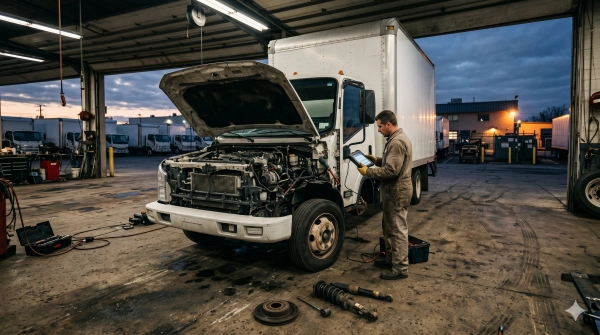
Used truck inspection refers to a systematic examination of a second-hand truck to evaluate its security, condition, and value prior to buying. Buyers and sellers alike use inspections to discover frame damage, engine wear, fluid leaks, rust, and concealed repair needs that could increase long-term expenses. Inspections typically span the engine bay, suspension, brakes, tires, lighting, undercarriage, and cab interior, with a test drive used to detect noise, smoke, or rough shifting. A lot of folks check service records, accident history, and so forth against what they see on the truck. To parse it all out to easy, the bulk takes you through critical inspections, tools, and red flags that count most when inspecting a used truck.
The Unseen Risks
Skipping a good used truck inspection frequently moves expense from the seller to you. Issues that remain invisible at the point of sale have a way of revealing themselves as repair invoices down the line. A pre‑purchase inspection, usually around CAD 150 to 400, depending on your location and how thorough you want it, will find worn brakes, oil leaks, or failing suspension components before you purchase. Without that check, you might be looking at unplanned work on fundamentals, along with big-time fixes like a gearbox or engine rebuild that can easily cost more than the inspection many times over. Some lenders will even mandate or highly recommend a third‑party inspection for a sight‑unseen deal because they know how quickly these expenses pile up.
Hidden damage is one of the greatest risks used trucks face. A truck that appears clean on the exterior might have frame damage due to a previous accident or excessive loading. Substandard repair work, such as welded frame rails or mismatched body panels, may not be apparent in a cursory walk-around. Trucks that have endured years up north may have rust on the chassis, brakes, and fuel lines from salt on winter roads. At first, it might just seem like light surface rust, but an experienced inspector can determine whether that rust has made it to any critical components that impact safety or towing capacity.
Validating the truck’s history is as important as validating its parts. A VIN check via a trusted vehicle history service might reveal any past collisions, significant work, odometer fraud or insurance ‘write-off’ status. Some big resellers will even mark units that were in previous accidents and suggest a third-party inspection in the report. More smartly, search for outstanding liens so you don’t purchase a truck that still secures someone else’s loan. Several buy policies provide you with a limited timeframe, generally a week to a month, to test drive and return the car, so you want to schedule this phase as early as possible.
Your Comprehensive Used Truck Inspection
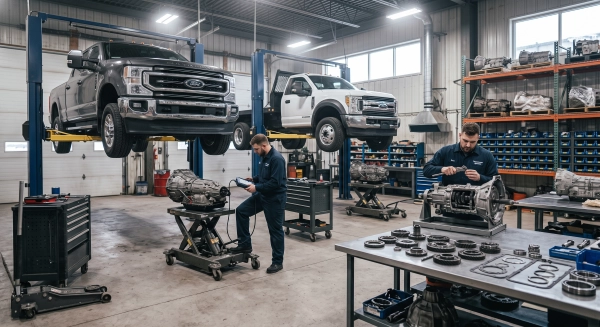
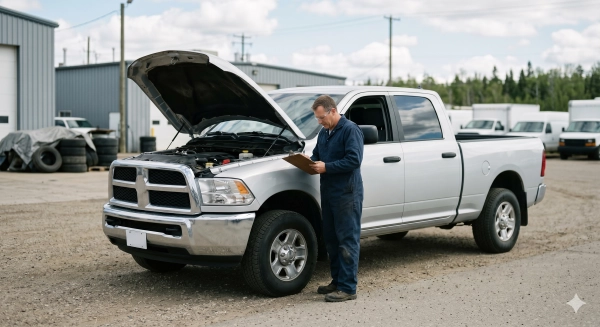
Your full used truck inspection should include paperwork, body, mechanical and on-road behavior and meet Alberta’s official inspection station standards for commercial and light trucks. Be sure to utilize a comprehensive checklist and request a complete written report along with photos and mechanic annotations so you can compare risks, repair expenses, and price transparently.
Key areas to cover:
- Paperwork and legal status
- Exterior body and frame
- Engine bay and electronics
- Undercarriage and running gear
- Interior condition and safety features
- Road test on different conditions
Bringing along a friend or family member who is knowledgeable about vehicles can provide a second set of eyes and help keep you objective.
1. The Paper Trail
Begin with a complete vehicle history. This can reveal accident history, previous owners, odometer rollbacks, theft reports, and any outstanding liens that could impact your ability to hold onto or resell the truck down the line.
Look for unpaid taxes, liens, and big insurance claims. These can hinder financing or indicate serious prior damage. VIN: Check that the VIN on the frame, dashboard, door sticker, and all inspection certificates is exactly the same, with no evidence of tampering.
Collect service books, oil change tags and repair/parts receipts. A solid, thorough paper trail of basic maintenance, such as regular oil and coolant changes, usually indicates a truck that received steady care rather than long periods of neglect and frantic patch jobs.
2. The Exterior Story
Walk around the truck in quality daylight and check for dents, scratches, rust spots, and gaps between panels. Run your hand along the body to detect wave or filler that indicates old collision repair.
Inspect the paint for color or textural differences from panel to panel. New, shiny paint on a single door or a new-looking roof can signify repainting or patch-ups, often concealing rust or frame work.
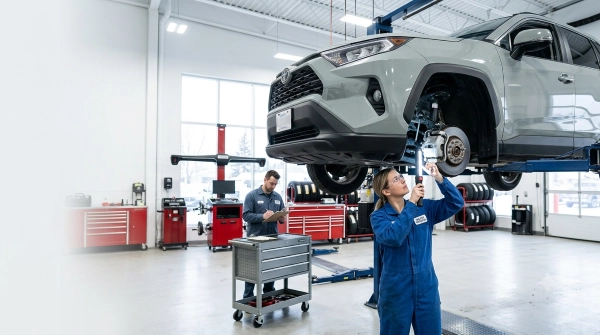
Check the tires for tread depth and even wear. Uneven patterns such as feathering, cupping, or excessive wear to one edge can indicate wheel alignment problems, bent parts or worn suspension. Check windshield, mirrors, lights and body panels line up with Alberta safety standards because fixing these prior to registration adds up.
Take an easy exterior checklist and note down each problem. These notes come in handy during price negotiations or when you request the seller to fix things before you sign.
3. Under the Hood
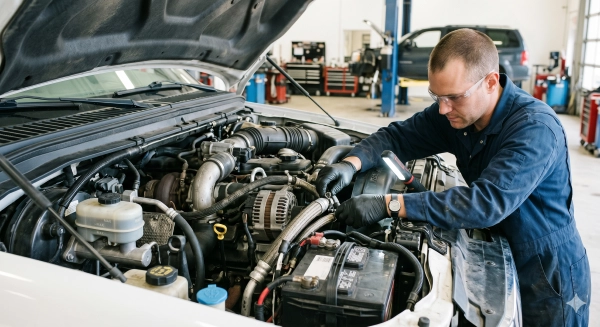
Open the hood with the engine cold if you can. Inspect engine oil, transmission fluid, brake fluid, and coolant for proper level, color, and odor. Burnt, milky, or gritty fluids can be indicative of neglect or internal damage. Leaks around gaskets or hoses can indicate upcoming repair invoices.
Inspect belts, hoses and the battery for cracks, bulges, loose clamps or green corrosion at the terminals. Shabbily taped wiring or connectors that don’t match can expose hastily completed electrical work that will continue to cause problems.
Kick the tires. More importantly, start the engine and listen at idle and light throttle for knocks, rattles, or loud ticking. Keep an eye out for warning lights that remain illuminated and indicators such as rough idle and smoke from the exhaust that could be a sign of a cracked head, block, or dying sensors.
Verify electrical and comfort systems work, including cruise control, backup camera, and other electronic aids. Errors here can be costly on newer trucks with complex modules.
4. The Undercarriage
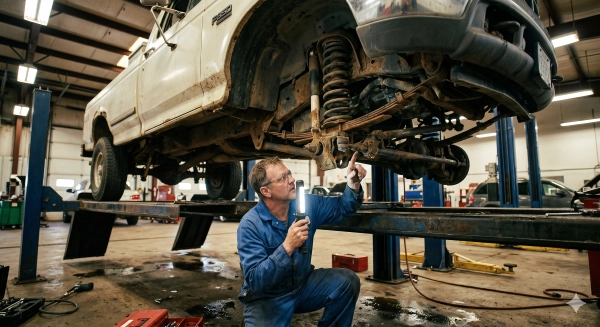
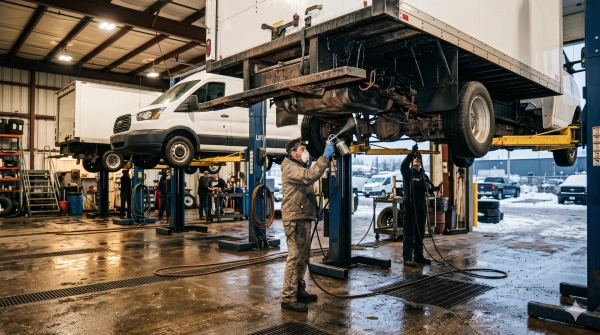
If it’s safe and permitted, poke your head under the truck. Inspect frame rails, crossmembers, axles, and suspension arms for rust, new undercoating that could be covering up repairs, bends, or welded patches. Check steering links and ball joints for damage or play.
Be on the lookout for any oil or fluid leaks around the engine, transmission, transfer case, and differentials. Inspect rubber bellows and CV joints for tears or grease splatter. These problems can rapidly spiral into expensive repair bills if ignored.
Check exhaust, fuel, and brake lines along their run. Significant rust, compromised frames, or unprotected rubber hoses instead of lines may fail Alberta inspections and could impact safety.
Grab your trusty flashlight and small mirror and check those hard to reach areas above the skid plates or by the tank. Concealed rust or cracks in these areas can be easy to overlook and are fatal in the long term.
5. Inside the Cab
Examine the seats, dash, steering wheel and switches for tears, cracks or missing knobs. Hard wear in the driver’s seat with low mileage can be a red flag.
Check windows, locks, mirrors, air conditioning, heater, radio, and any infotainment or entertainment system to ensure they work as described. Interior electronics that go bad typically indicate broader wiring problems.
Inspect all safety equipment such as seatbelts, airbags (indicator light should come on for a moment, then turn off) and other indicators. Any airbag or ABS light that remains on requires appropriate diagnosis.
Cross-check the odometer reading with service records and stickers from previous inspections. Look for indications of tampering, such as skewed numbers or conflicting mileage and dates in the documentation.
6. The Test Drive

Take the truck for a drive on city streets and highway speeds if possible. Take note of how it fires up, idles, pulls away from a stop, and shifts for any lag or jerk in acceleration or shifting.
Hear clunks, whines, or grinding from the engine, transmission, or suspension, both over bumps or in steady cruise. Any hard pull to one side or steering wheel shake could indicate alignment or suspension issues.
Test steering with gentle, then sharper turns, releasing the wheel briefly on a straight, empty road to see if it tracks true. Sense for play, binding, or uneven resistance as you turn.
Test brakes at low speeds first to feel for a firm, steady pedal and smooth stopping without pulling or noise. Then test from higher speeds where safe. Make sure cruise control maintains speed and observe that all dashboard lights are normal prior to, during, and post drive.
Alberta’s Harsh Realities
Alberta is tough on trucks. Alberta’s long winters, road salt, blowing gravel and extended highway runs all make their undeniable impression on used vehicles. When you buy a used truck there, you’re not just buying a machine; you’re buying its history with this environment.
| Environmental factor | Typical impact on trucks | What you may see on inspection |
|---|---|---|
| Road salt and chemicals | Faster rust on frame, brake lines, fuel lines, body panels | Flaking metal, soft spots, leaking lines, rusty fasteners |
| Freeze–thaw cycles | Cracked pavement, deep potholes, rough joints | Bent rims, misaligned suspension, worn shocks and bushings |
| Gravel and debris | Constant stone hits on underside and lower body | Chipped paint, dented crossmembers, damaged brake shields |
| Long, straight highways | High, steady engine loads and heat build-up | Tired engines, worn cooling parts, stretched timing chains |
| Heavy towing and hauling | Extra strain on frame, axles, brakes, and transmission | Sagging leaf springs, frame rust at stress points, hot brakes |
The reality for many of Alberta’s trucks is that they live their lives on the open road, pounding highways with frequent heavy loads. That regular high-speed use can be great for keeping engines clean, but it piles on wear. Engines that tow close to their maximum continuous for hours can exhibit low compression, oil seal leaks or cooling problems earlier than a lightly used truck. Suspensions take repeat blows from expansion joints and potholes, which can loosen steering, wear ball joints and fatigue shock absorbers. Frames on work trucks that transport tools, fuel tanks or slide-in campers can reveal stress at mounting points and at the rear overhang.
Undercarriage and body condition require close, patient inspections. Alberta’s roads are unforgiving, as evidenced by the province’s recent commercial vehicle blitz that found 92% of vehicles not meeting safety standards, 26 put out of service, and 44 provincial violation notices issued. Check the frame rails, crossmembers, brake and fuel lines, and wheel wells for deep rust, not surface color. Wheel ends (wheels, rims, hubs, tires) are a known Achilles’ heel on these highways, so check for uneven wear on tires, cracked rims, loose or rusty studs, and hub leaks.
Due to rigorous criteria and aggressive policing, 457 inspections in three days in one 2021 campaign, with Alberta Sheriffs participating, service logs count. Focus on trucks with maintenance logs, inspections, and documentation of on-time work done to brakes, suspension, and steering. That paper trail is usually the best evidence a truck can survive Alberta’s harsh realities and still be safe and dependable for you.
Decoding Diagnostic Reports
Directly decoding diagnostic and history reports can be a heavy lift, even for know trucks. For first-time buyers, with data, codes and long comments, it can be difficult to discern what really matters for safety, cost and long-term use.
Begin with a basic checklist so you don’t skip important issues. Check that the basics match the truck in front of you: make, model, year, VIN, engine type, gearbox type, and mileage. A discrepancy here is a red flag. Review notes on body and frame: any record of frame damage, rust repair, or panel replacement. Cross-check this with what you observe, like faded or discolored paint, irregular panel gaps, and the condition of lights, wiring, and glass. Look for comments on tires and suspension, and link them to what you see on the tires: feathering, cupping, or heavy wear on one side can point to bad alignment, worn suspension parts, or incorrect tire pressure over time.
Request a detailed, line-by-line inspection report, not a one-liner ‘all clear’ comment. Every problem, what they found, why it’s important, and the repair the inspector believes is necessary, with parts and labor broken down in cost. For instance, ‘front brake pads 3 mm, rotors scored, replace pads and rotors, ‘brakes worn’ is not. Itemized costs assist you in prioritizing what is immediate, like steering or brake issues, and what can hold, like worn interior trim.
Compare the diagnostic and vehicle history data beside what the seller says. A complete history report can reveal accident history, how many owners the truck had, odometer rollbacks, theft records, and liens that indicate the truck is still being used as loan collateral. Look over the service history for timely oil changes, gearbox servicing, and any treatment to the DPF or AdBlue unit, which generally give up way too early with shoddy maintenance. On the road test, link the report to how the truck drives. Any pull to one side, shake in the brake pedal, or loud whine from the gearbox should match or update the findings on paper. If any item sounds unclear or strange, pose specific questions or have a reliable mechanic interpret the report and provide a second opinion. Use the full report set as a tool in talks. You can ask for repairs before the sale, a lower price to cover clear defects, or walk away if the risk is too high.
From Inspection to Negotiation
A comprehensive used truck inspection establishes the framework for all subsequent steps. Now that you have clear data from the exterior, interior, and under-the-hood inspections, that data becomes a lever to influence price, repairs, and contract terms instead of guessing or trusting the seller’s word.
As in – inspection notes into numbers. Detail every defect the inspection identified, from uneven tire wear and frame rust to steering play, brake noise or weird vibrations under load. A good inspection will catch things like pulsating brakes, loose steering on rough roads, or a noisy gearbox that a quick test drive might not reveal. For each, obtain a repair estimate from a shop that services commercial trucks, preferably in writing. Then at the same time, search for fair market value for the same make, model, year, mileage and engine, in similar condition, in your area. Most buyers run a Vehicle History Report to check for accidents, previous owners, and any damage that could explain the inspection findings. Then do a lien search through the local PPR or equivalent office to see if there is some legal claim on the truck. A lien is a claim against the vehicle to satisfy a debt. If it doesn’t get cleared, it can attach to the truck, not the seller.
To keep all this aligned, it can help to set up a simple overview:
| Item / Factor | Details / Example |
|---|---|
| Key defects | Brake pulsation, steering play, oil leaks |
| Repair estimate | CAD 2,940 for brakes, CAD 1,764 for steering |
| Market value (good shape) | CAD 51,450 |
| Adjusted value (after work) | CAD 46,746 |
| Lien status | Clear / outstanding with bank |
With this, price discussions stay specific. Buyers can highlight obvious discrepancies between market value and the seller’s asking price, according to real repair history and costs. Occasionally, rather than a price reduction, the seller will fix important safety-related items prior to sale, or include a brief dealer warranty, discounted service plan, or extended engine and transmission coverage. For commercial buyers, it’s typical to bundle this with equipment financing, where financing can be approved and disbursed in roughly 48 hours after all the truck history and lien paperwork is finalized. Whatever both sides agree upon—repairs, price, lien payoff, payment schedule, any service or warranty terms—should be in a written contract or bill of sale before the truck changes hands.
Choosing Your Inspector
Picking the right inspector is as important as picking the right truck. The aim is to get a crisp, honest image of the truck’s actual condition before you put your cash down.
Begin with a licensed vehicle inspection station with certified mechanics and a structured inspection protocol. When purchasing a used truck, getting it inspected by a certified technician isn’t a perk — it’s the fundamental step that informs you whether the truck is safe, street-legal, and priced right. The right inspection can catch worn brakes, frame damage, or engine trouble early — before they become catastrophic failures that cost thousands of dollars and weeks of downtime. The cost of a thorough pre-purchase check isn’t trivial, typically between 169 and 329 local currency units, but this is reasonable compared to a major engine rebuild or gearbox swap.
Select your inspector. Pick a shop that deals with trucks on a daily basis, not one that only encounters light passenger cars. Commercial vehicles, heavy-duty pickups, and fleet trucks have different loads, brakes, suspensions, and sometimes air systems. Alberta has its own rules for vehicle safety inspections, and not every shop is familiar with them. An inspector familiar with Alberta’s program will inspect frame rails, steering components, and brake lines to the province’s standard, not just ‘looks okay’ level. For example, if you’re purchasing a refrigerated box truck, find an inspector that inspects potential auxiliary systems, such as the cooling unit and power take-off.
Before you book, ask direct questions regarding credentials, process, and reports. Verify that the technician is certified, inquire about their truck experience, and see a sample report. The inspection should include engine performance, underbody condition, and vehicle history, such as any crashes or major repairs. A select few buyers utilize mobile pre-purchase inspections, where the technician comes to the truck and can view it cold, hot, and possibly even with a load. Straight talk, documented findings, photos, and simple professional recommendations provide you with the information to either say yes, walk away, or renegotiate.
Conclusion
A used truck can treat you well for years if you begin with a check – not a guess. You now understand the key hidden dangers, the essential steps for a strong inspection, and the warning signs in reports and price negotiations. That blend provides you true punch in the lot and at the table.
Alberta roads really pound trucks, so a fast stroll around the yard doesn’t do it. A good inspector who understands local wear and salt damage can save you real money and headaches.
Next, select a truck from your short list. Schedule a used truck inspection, examine the report line item by line item, and utilize what you discover to establish your price and boundaries.
Frequently Asked Questions
Why is a used truck inspection so important before buying?
Used truck inspection hides mechanical, structural, and safety issues. It saves you from costly repairs, unsafe cars, and rotten bargains. You see the truck’s actual state prior to your purchase.
What should a comprehensive used truck inspection include?
It ought to include engine, transmission, brakes, suspension, frame, tires, electrical and fluids. It requires a road test, underbody inspection and a scan of all electronic control modules. This comprehensive method minimizes shocks post-purchase.
How does Alberta’s climate affect used trucks?
Cold winters, road salt and fluctuating temperatures can create rust, frame damage and worn suspension. Engines and batteries work harder in the cold. A targeted inspection in Alberta needs to closely examine corrosion, seals and cold-start performance.
How do I understand a diagnostic report from a used truck inspection?
A good report breaks down fault codes, wear levels, and safety issues in understandable terms. Be sure to identify explicit notes on urgency, costs to repair, and impact on reliability. Have the inspector walk you through each point before you make your final decision.
Can I use the inspection report to negotiate the truck price?
Yes. Use the documented issues and repair estimates to negotiate a lower price or to get the truck fixed. A comprehensive, independent report provides you with powerful, evidence-based negotiating leverage.
Should I trust the seller’s inspection, or hire my own inspector?
Independent inspections are safer. A seller’s report might not flag everything. Employing your own qualified inspector provides you with unbiased information and protects your interests.
How do I choose a qualified used truck inspector?
Seek out certified heavy-duty techs experienced with the type of truck. Check reviews, sample reports, and turnaround times. A good inspector is transparent, independent, and happy to explain in plain language.
Not what are you looking for? Browse Hart Transmission resources to minimize downtime and maximize efficiency with expert repair, diagnostics, and preventive maintenance services.
Fleet Services and Preventive Maintenance
You can also check below resources for added information