- Key Takeaways
- The Real Cost of Neglect
- Your Hydrovac Maintenance Schedule
- How to Adapt Your Plan
- What Your Truck Is Telling You
- The Unseen Systems
- Why Professional Service Pays
- Conclusion
- Frequently Asked Questions
- How often should I service my hydrovac truck?
- What happens if I delay hydrovac maintenance?
- Which hydrovac components need the most attention?
- How do I know if my hydrovac maintenance schedule needs adjustment?
- What warning signs should I never ignore on a hydrovac truck?
- Why is professional hydrovac service better than only in-house maintenance?
- Are unseen systems in a hydrovac truck really that important?
Key Takeaways
- A definite hydrovac maintenance schedule decreases emergency breakdowns, safeguards operator safety, and helps prevent expensive downtime that can impact client relationships and project schedules. Maintaining it as a planned investment, not a response to breakdowns, protects productivity and profit.
- Routine inspections from daily walkarounds to year-end overhauls increase equipment longevity and preserve high resale value. Documented service, clean systems, and visible care make the truck more appealing and reliable to potential buyers.
- A schedule of daily, weekly, monthly, quarterly and annual tasks keeps all the major systems in check — engine, hydraulics, vacuum, water, chassis and electrical. By utilizing checklists and logs, you can make certain that no step is forgotten and problems are monitored until fully addressed.
- Tailoring the maintenance schedule to jobsite conditions, weather extremes, and level of use mitigates premature wear and failures. Tuning service intervals for abrasive soils, temperatures, or double-shift operation keeps the schedule practical and effective.
- Hydrovac Maintenance Schedule Simply put, hydrovac trucks “speak” to you through strange noises, decreased performance, or fluid leaks. If you listen, you can catch issues before they become big problems. Proactive operator input and accountability combined with an analysis of digital monitoring data reinforces preventive maintenance.
- Adding invisible systems and expert service into the mix offers a more well-rounded protection plan for the fleet. Regular inspections of electrical, chassis, and electronic systems along with assistance from certified technicians preserve warranties, comply with industry regulations, and keep your vehicle primed for each job.
A hydrovac maintenance schedule is a scheduled series of inspections, servicing, and component replacements that ensure a hydrovac truck remains safe, dependable, and economical to operate. Numerous operators employ it to monitor engine servicing, blower maintenance, water pump maintenance, boom and hose inspections, and debris tank washing on designated hour or kilometer thresholds. A solid schedule cuts unplanned downtime, slashes repair bills, and satisfies warranty and safety regulations. It facilitates improved fuel utilization and consistent suction performance on site. In day-to-day work, a solid schedule becomes checklists, logs, and easy guidelines that crews can adhere to. The following sections detail what to include and how often to perform it.
The Real Cost of Neglect
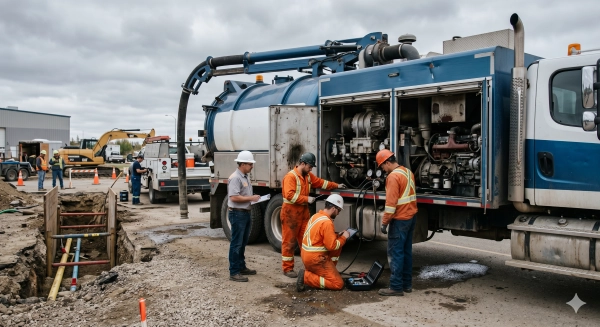
Skipping a structured hydrovac maintenance plan does not just damage the truck. It bleeds cash flow, upends projects and piles risk on each site.
Downtime Dollars
When a hydrovac sits in the yard and not on site, revenue ceases but costs don’t. Daily operating cost alone can easily hover between $750 and $1,500 CAD before you even get to crew wages, transport, and overhead. If that unit is booked at a day rate much higher than that, every idle day can mean several thousand dollars of lost margin, and the same fixed costs are still going out.
Unscheduled breakdowns impact project schedules as well. A failed blower or hydraulic leak mid-shift can shut down daylight-only work, push traffic control into an additional day, or require crews to dig by hand. Schedules slip, clients wait, and follow-on trades stand down. A single neglected service window can cascade across an entire week of work.
It’s not just the repair bill itself that’s typically the worst surprise. Failing preventive service usually shoves repairs into the emergency realm, which can cost five to ten times as much as the same work done on a planned basis. Blower rebuilds can cost anywhere from $8,000 to 16,000 CAD and pump rebuilds tend to hover around USD 3,000 to 8,000. Add hydraulic problems and you’re looking at another $13,000 to 14,000 CAD a year, particularly on older trucks.
| Item | Scheduled maintenance (approx.) | Emergency failure (approx.) |
|---|---|---|
| Pump service / minor rebuild | $700–1,300 CAD | $4,000–10,000 CAD |
| Blower service / inspection | $1000–1,600 CAD | $8,000–16,000 CAD |
| System check (fluids, filters) | $300–500 CAD | Extra unplanned repairs $13,000–40,000 CAD /year |
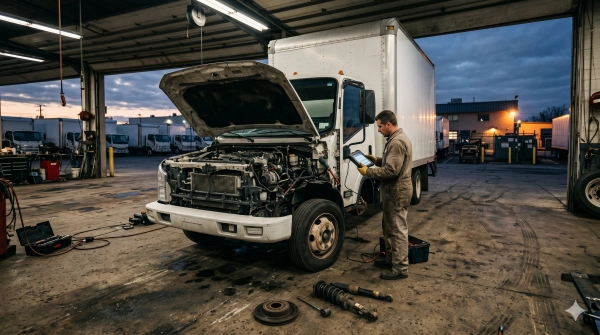
When preventive maintenance is missed, unexpected failures often require extensive heavy-duty truck repairs that can take equipment out of service for days.
Safety Risks
Wear in hoses, valves and seals may turn into sudden bursts of high-pressure water or vacuum loss at the nozzle, exposing operators to proximity of uncontrolled energy. A neglected heating system in cold climates can allow water to freeze in lines or tanks, which causes cracks or sudden blockages that result in pipe bursts and flying debris. Even basic neglect of filters and relief valves increases the risk of component failure while the unit is under peak load.
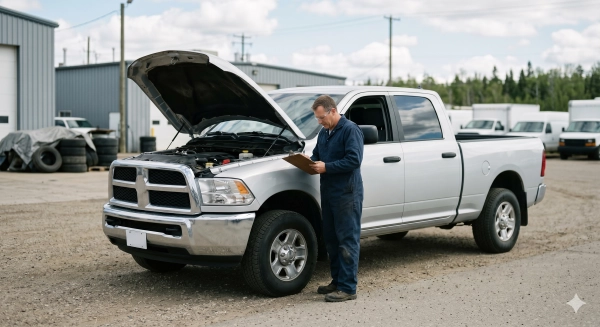
Routine commercial vehicle inspections help identify worn components before they become safety hazards on active worksites.
Safety systems deserve that same attention. Defective emergency stops, weak grounding, or degraded lighting and alarms raise the risk of injury or damage in the vicinity of buried utilities. A hydrovac that doesn’t maintain consistent suction or pressure, for instance, can over-expose cables or gas lines, increasing the risk of strikes or leaks and potential contamination to surrounding soil and water.
A basic safety checklist helps keep critical items in view:
- Check pressure and vacuum gauges, relief valves, and safety interlocks.
- Pesticide: The Real Cost of Neglect Check hoses, nozzles, and boom seals for wear, cuts, and leaks.
- Test emergency stop switches and backup alarms.
- Make sure heating systems and insulation are set for the cold.
- Check grounding, lighting, and signage for utility and traffic work.
Operators should also remain familiar with current Alberta commercial vehicle safety requirements to ensure equipment remains compliant.
Resale Value
Used buyers pay more for units with transparent, consistent maintenance history. A folder of service sheets, oil analysis and work orders detail that pumps, blowers and hydraulics were not run to failure. Many buyers will put two comparable trucks side by side based on maintenance records alone and pay more for the one with detailed logs and recent preventive work.
Obvious neglect means a deep discount. Leaks around the pump, rust on the debris tank, worn tires, or corroded fittings all scream danger lurking. A skipped heating system checkup in cold climes can lead to freeze damage in lines or tanks, which scares away buyers or demands steep markdowns.
Maintain your digital or paper service records, dating and systematizing them to simplify resale discussions. Listing any major recent work, like “blower rebuild at 4,800 hours,” “pump rebuild last year,” or “full hydraulic service this season,” in your sales ad gives serious buyers confidence and cuts down on negotiation time.
Your Hydrovac Maintenance Schedule

An organized maintenance plan works best when paired with a professional fleet maintenance program that tracks inspections, repairs, and service intervals across every vehicle. By breaking tasks out into daily, weekly, monthly, quarterly, and annual work, it becomes easier to track and assign them. A basic calendar or digital checklist shared among all operators lets you log what was done, by whom, and when, so the truck remains inside its intended 7,000 to 10,000 operating hours of useful life.
1. Daily Walkaround
Daily checks are concerned with safety basics and early warning signs. Operators should circle the truck prior to first start checking engine oil, coolant, hydraulics and fuel, as well as tire pressure and sidewall damage. Check for new patches of oil, coolant or hydraulic fluid under the unit or on frame rails, as minor leaks tend to appear overnight.
Hoses, nozzles and safety devices require a fast, deliberate glance. Inspect suction and pressure hoses for cuts, soft spots, crushed areas and loose clamps. Ensure that nozzles are not plugged or deformed and that guards, emergency stops and interlocks operate as designed.
Washing is daily maintenance, not a discretionary task. Rinse down boom, hose reels and panels, and clean debris screens and filters so clogs don’t starve the pump or blower. A clean hydrovac is one of the best ways to catch damage early, as cracks, rust, and leaks pop on clean metal.
Any observations should be documented in a daily log or app. If you see anything unsafe or abnormal, report it immediately so the truck does not go out with a known defect.
2. Weekly Inspection
Weekly checks penetrate further into moving mechanisms. Grease hinges, boom pivot points, door latches, and any grease fittings according to the manufacturer’s chart for grease type and intervals.
Check hydraulic lines, fittings and PTO parts for chafing, loose clamps and seepage. Inspect the water pump, vacuum blower and debris tank seals for abnormal noise, vibration, or loss of performance. Test lights, beacons, alarms and backup cameras so the truck stays compliant and safe on busy sites.
Cooling systems deserve a little TLC every week, particularly in hot weather. Check the coolant level and concentration, inspect hoses and clamps, and clean off any debris from the radiator and charge-air cooler to reduce the risk of overheating.
3. Monthly Service
Monthly service picks up the slower-wearing items that still impact uptime. Change air, oil, and water filters as necessary as determined by hours and the environment. Dusty or muddy work may require more frequent changes.
Inspect mounting bolts and fasteners on the body, boom, tanks, and pump assemblies with a torque wrench where specified. A loose bracket or cradle, if ignored, can evolve into cracked steel or broken frames.
Flush and wash out the debris tank, inspecting for corrosion, liner damage, and stuck valves. During winter, ensure tanks and hoses are completely drained when needed, as trapped water can freeze and damage lines, valves, or fittings.
If the truck has a digital monitoring system, check logs for error codes, temperature spikes or pressure anomalies. Tweak the schedule if you detect recurring patterns.
4. Quarterly Deep-Dive
Quarterly work is more like a mini-overhaul. Conduct an in-depth engine and transmission inspection, take fluid samples for laboratory analysis, and search for metal, coolant, or fuel marks that indicate premature wear.
Hydrovac Maintenance Schedule Test hydraulic system pressures against specifications and replace any hoses, seals, or cylinders that exhibit leaks, swelling, or slow response. Shake down the chassis—crossmembers, suspension mounts, and steering components—for cracks, rust, or fatigue that can proliferate under heavy loads.
Use the results to optimize your maintenance schedule. If something observed above average wear, shrink its service interval before it breaks down on the job.
5. Annual Overhaul
Yearly maintenance is a complete system reboot. Schedule full diagnostics and calibration of pumps, blowers, sensors, and controls by trained technicians. These visits frequently discover problems far ahead of when they trigger a breakdown that can cost tens of thousands of dollars in repairs and lost revenue.
Schedule to change major wear items like belts, gaskets, and key PTO components by hours and not just by age. Inspect all electrical wiring, connectors, and grounds for abrasion, moisture ingress, and corrosion, particularly around the boom and frame rails.
Winter care fits here: confirm procedures for using antifreeze in water systems, draining lines fully when the truck will sit overnight, and running the boiler daily so valves and pumps do not seize. A truck that’s cleaned, drained, and heated when required has a much better shot at hitting and exceeding 8,000 operating hours.
Annual maintenance reviews should align with Alberta vehicle inspection standards to support safety and compliance.
How to Adapt Your Plan
A set hydrovac maintenance schedule gives a baseline: weekly basic checks, monthly and quarterly system inspections, and annual deep service. That baseline shouldn’t remain static. It has to flex with jobsite conditions, weather, and the effort level of each truck, so the entire schedule matches the way the fleet operates in reality, not on paper.
Jobsite Conditions
Jobsite conditions alter the speed of parts wear, so the same truck may need different maintenance in different regions or contracts. In abrasive soils, such as sharp sand or crushed rock backfill, vacuum tubes, elbows and filters wear quicker, so filter swaps and hose inspections might shift from monthly to every week or two. Where debris is combined with scrap metal, crushed concrete or wood, operators might have to do quick visual inspections during breaks and record any cuts, bulges or weak spots in the hose. Muddy or corrosive sites, such as work near industrial plants or along coasts, typically translate into additional washing of the body, boom and undercarriage to reduce rust and more frequent inspection of valves and tank seams during weekly inspections.
In wet clay, fine silt can pack into strainers, nozzles and screens, so the ‘clean and flush’ steps from the annual program may move into the regular monthly schedule. If tanks and lines aren’t cleaned well, that packed material can become hard, reduce vacuum performance, and increase fuel consumption and pump load.
- Soil type: sand, rock, clay, or mixed fill
- Presence of chemicals, salt, or other corrosive agents
- Debris size that may damage hoses or nozzles
- Frequency of tank fills and dumps per shift
- Need for extra washing or rust protection steps
Cataloging them by task and correlating them to additional inspections helps convert a basic maintenance list into a component of a broader schedule that truly suits each location.
Weather Extremes
Weather adds an additional dimension. In winter, operators should test antifreeze strength, heater function, and any de-icing systems prior to work commencing, then monitor boiler operation daily. Even briefly running the boiler when trucks are sitting can prevent internal parts from seizing. If water tanks and hoses are not drained or heated, trapped water can freeze, crack fittings, and transform a simple weekly check into a big repair. In very hot regions, seals deteriorate more quickly, so teams should examine rubber components and hoses for cracking post-heat waves and might move certain work out of the hottest periods to reduce stress on both cooling and hydraulic systems. Batteries and electrical systems are impacted in both heat and cold, so extreme climates might necessitate extra midseason inspections and improved off-season storage, like indoor parking or temperature-controlled layup procedures.
Monitoring Alberta road conditions can help fleet managers prepare maintenance schedules around seasonal weather events.
Usage Intensity
High-use units require a tighter plan than trucks that run only a few days per week. Hydrovacs on double shifts, long-haul moves or high demand projects typically bump some “monthly” tasks, like detailed vacuum and water pump checks, down to a bi-weekly cadence. Those on light duty can remain closer to the standard intervals.
- Engine hours and vacuum pump hours per day
- Number of digs or exposure holes per shift
- Average load weight and dump cycles
- Idle time versus active digging time
Tracking this telematics data or hour meters helps identify which trucks are approaching wear limits earlier than anticipated, allowing parts to be replaced prior to failure. Fleet managers can rotate units so that the same hydrovac isn’t always dispatched to the hardest work, equalizing wear and increasing the chances each truck hits 7,000 to 10,000 operating hours, or roughly five to 10 years of service. With trained operators who know to do daily checks and a clean, full service history, many fleets experience fewer breakdowns and frequently receive 10 to 20 percent more on resale value when trucks are sold.
What Your Truck Is Telling You
A hydrovac truck just doesn’t quit on you with no notice. It ‘talks’ in noise, feel, leaks, and performance data, and those little signals often show up way before a big breakdown. When operators report strange noises, odors, or vibrations immediately, maintenance crews can intervene sooner, maintain the truck near peak efficiency, and preserve margin on both uptime and component life across thousands of operating hours.
Strange Noises
Grinding, squealing, or knocking noises typically indicate that some moving components are misbehaving. Bearing problems can be identified by grinding noises in the vicinity of the blower. A high squeal from the hydraulic system can indicate relief valves chattering or pumps running under stress. Powerpack or drivetrain knocking can indicate loose mounts or worn joints.
Any time a new noise is loud, repeats frequently or deteriorates under load, the operator should cease work and report it immediately, not wait until the end of the shift. For instance, operating a blower with a bearing that already howls can escalate a simple bearing swap into a complete blower replacement after only a few more hours of operation.
Operators should note what they hear, where it sounds to come from, and under what conditions it occurs, like at a specific RPM or when doing high-pressure digging. These notes provide technicians with an accelerated route to the root cause and minimize time lost on trial-and-error inspections. Noisy parts in particular, especially pumps, blowers, and rotating shafts, should jump to the top of the next daily, weekly, or monthly inspection list.
Performance Drops
A loss of suction, slower digging, or feeble water pressure is usually the first obvious indication that service is needed. You can tell when the truck needs more passes to move the same soil or the hose plugs more often. You’re probably running the system below the baseline the manufacturer intended.
Usual suspects are clogged air filters, pistons with worn nozzles that no longer profile the jet nicely or pumps gone with internal clearance after countless hours. The truck can still operate, but it may consume additional fuel and require more time to complete the same job, impacting fleet productivity.
Operators and managers should compare current performance data to the original baseline: vacuum level, water pressure, and average time to expose a standard utility in typical soil. A lot of manufacturers tie service to operating hours or miles, so a performance low near one of these intervals is a good indication to get the truck in early.
If output dips below the normal range, the truck should be scheduled for immediate maintenance rather than waiting for a total loss of suction or water flow. That philosophy helps avoid big, expensive failures, keeps the truck near optimal efficiency, and extends useful life over numerous years and thousands of hours.
Fluid Leaks
Any hydrovac that runs hard every day is going to stress seals and hoses. As part of the daily routine, a quick walk-around includes looking under the truck for oil, coolant, or hydraulic fluid puddles. Little drips seem to come first and then turn into constant leaks if you disregard them.
If you find a leak, trace it back to its source, don’t just wipe it off. That could include inspecting hose crimps or o-rings at fittings or gasket joints on pumps and tanks. Taking care of an inexpensive seal today is almost always a lot cheaper than replacing a pump that ran low on fluid for weeks.
Spills must be dealt with immediately, both for safety reasons and to prevent environmental damage, particularly if working on a public road or a sensitive site. Every leak and repair should be added to the maintenance log, so patterns emerge over months and help inform better planning for parts replacement near known wear points.
Operator Feedback
Operators are the ones who spend the most time with the truck, so their input is a core part of hydrovac fleet management. Basic daily questions like how it feels to handle, how the control feels, and how fast the system is acting to take small changes sensors alone might otherwise miss.
Teams should train operators to observe and communicate subtle changes, such as slight steering pull, slower boom response, or increased vibration via the controls. These specifics assist maintenance personnel in determining which machines should receive more thorough examinations during monthly inspections or the next operating-hour milestone when essential components are replaced.
Feedback needs to feed directly into the maintenance plan, so trucks with repeated ‘minor’ issues get top priority for preventive work before they break down on site. Brief, frequent meetings with operators and technicians to discuss recurring issues and propose minor process adjustments can pay dividends in less downtime surprises, extended component life, and more consistent uptime across the fleet.
The Unseen Systems
Hydrovac uptime is about more than pumps and tanks. Unseen systems in the electrical, chassis, and digital layers determine if the unit starts, runs safely, and survives 7,000 to 10,000 operating hours, frequently five to ten years of use. They deserve a permanent slot in every servicing schedule, checklist, and work order, not relegated to “when there’s time.
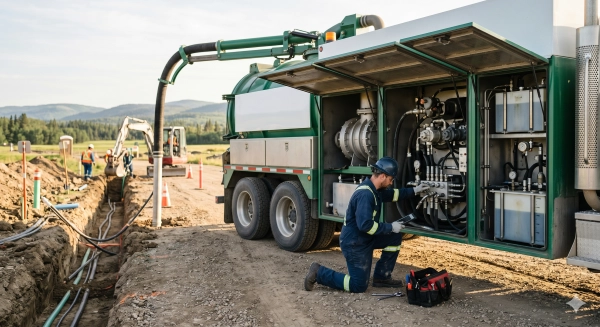
Electrical Integrity
Establish a habit of checking battery voltage and alternator output with a meter, not intuition. Weak batteries lead to hard starts, unstable voltage to control modules, and false error codes. On high-demand days or in very hot or cold weather, test before the shift, not after something fails in the field. Run the boiler every day, even when the truck is not on a job, to keep the internal systems moving and prevent stagnation.
Trace major wiring runs and check for corrosion at terminals, frayed insulation near sharp edges, and loose lugs on high-draw circuits. A tiny green patch on a connector in winter can become a no-start call on a remote site. Neglecting to clear water tanks and hoses during cold months frequently manifests itself here first as moisture wicks into harnesses and freezes.
Verify that sensors, relays, and control modules are actually doing what the display says they are doing. A level sensor that says ‘full’ when the tank is empty will destroy any computerized maintenance schedule. Use simple diagnostic tools and built-in self-tests to catch these issues early, then immediately replace bad relays or modules instead of attempting to work around them for a few more shifts.
Chassis Health
It’s the chassis that bears the full load. Include a frame and suspension walk‑through in every service appointment. Look through the frame rails, crossmembers and mounting points for cracks, rust and bent sections, particularly around tank and boiler mounts.
The Unseen Systems alignment, bushings and mounts for excess play or strange wear patterns on tires. If the truck pulls to one side or the tank rocks when you stop, the chassis is screaming at you that there’s a problem.
Keep pivot points, steering links, and suspension joints greased and watch out for missing bolts or loose brackets. A little grease on time is much less expensive than a fractured spring or torn tank mount.
Schedule at least one full undercarriage cleaning and undercoating every year. This is important in the winter, when road salt and saturated earth lay on steel for months, and in hot climates where fine dust and moisture bake onto those unseen places and hold heat.
Digital Monitoring
Digital tools only assist if they actually function and if they remain in sight. Make sure telematics and onboard diagnostics are online, sensors are calibrated, and data is actually logging. A drifting flow or temperature sensor can mask initial indications of boiler or cooling issues.
After each shift, skim system alerts and error codes, not clearing them out of habit. Codes for high coolant temperature or multiple low-voltage events tend to appear days prior to an actual failure. In hot seasons, combine this review with a weekly cooling system check to identify fan, hose or coolant problems prior to the truck overheating. If you can, avoid the heaviest digging during the hottest parts of the day and open all drain valves in shutdown, so air circulates, water drains, and lines remain clear.
Update software and firmware to the latest version suggested by the manufacturer. Updates tend to correct false alarms, make sensors more accurate, and add better data logging. Leverage the data to time service by hours, temperature spikes, and fault trends rather than purely by calendar dates. For instance, if logs indicate freezing warnings are common, implement anti-freeze to water systems, fully drain lines when the truck sits overnight, and tighten winter clean-out procedures to prevent hose bursts and extended downtime. A turnkey system that ties physical inspections to this data reduces unexpected breakdowns, minimizes repair expenses, and keeps the unit primed for service.
Why Professional Service Pays
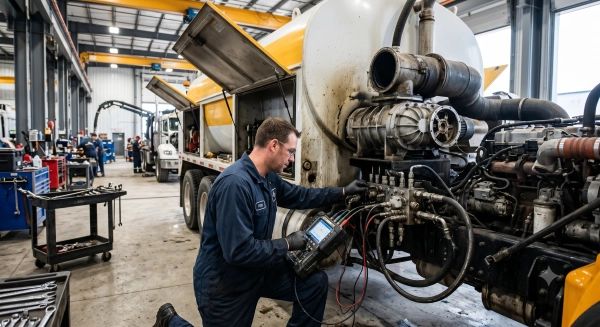
Professional hydrovac service turns maintenance from ‘patch and pray’ into a maintenance plan that safeguards uptime, resale value, and compliance. It’s not just a matter of who turns wrenches, but about data quality, tooling, and evidence that the unit was tended to during 7,000 to 10,000 hours of operation.
| Factor | Professional Service | In‑House Maintenance |
|---|---|---|
| Diagnostic accuracy | Advanced scan tools, trend data, full reports | Visual checks, basic readers, limited history |
| Tools and equipment | OEM‑approved tools and calibration rigs | General tools, few specialized fixtures |
| Warranty protection | Follows maker schedule and documentation standards | Higher risk of missed items and voided coverage |
| Downtime risk | Planned stops, faster fault isolation | Longer trial‑and‑error troubleshooting |
| Resale value | Full records can add 10–20% of original cost | Patchy logs, harder to prove careful ownership |
| Compliance and safety | Work aligned with industry and local regulations | Depends on internal know‑how and training |
Expert Diagnostics
Professional shops connect to the hydrovac’s electronic control units using advanced diagnostic scan tools that read much more than just fault codes. They catch sensor drift, pressure spikes in the vacuum and water systems, and even patterns like repeated over‑temperature events that indicate hidden wear well in advance of an onsite failure.
Those tools provide input data for transparent reports. A technician reads code histories, compares readings to manufacturer thresholds, and links the findings to specific repairs, such as a marginal blower bearing, a weak hydraulic relief valve, or a loading pattern that strains the water pump. This eliminates guesswork and reduces return trips, which counts when every hour down costs money and holds up crews.
Documented diagnostics back warranty claims and audits. If the service file is full of preventive checks and measured responses, it’s easier to demonstrate that the failure wasn’t caused by misuse, which means no out-of-pocket repairs on major systems.
Specialized Tools
Qualified hydrovac shops use torque-controlled wrenches, pressure and flow calibration benches, vacuum gauge manifolds, and factory jigs for tanks, booms, and subframes. These are not typical of general workshops and are essential for high pressure, high load systems.
With the right tools, a shop can set pump relief valves to the precise bar rating, align booms so seals wear evenly, and torque driveline components to spec. That reduces the risk of a “repaired” unit returning with a cracked housing or early seal failure from over-tightening or misalignment.
Warranty Protection
Most hydrovac warranties require service at set hour or time intervals and for evidence that the work satisfied the manufacturer’s checklist. Professional providers build their schedules around those guidelines, log every visit, and maintain organized invoices and inspection sheets. That documentation assists in maintaining warranty status and prevents claims from being rejected because of absent or insufficient maintenance.
This comes into play when a costly component breaks down, like a blower, pump, or a hydraulic motor. With service history in check, owners are much less likely to pay full replacement costs as parts and in some cases labor stay covered instead of being billed back to the fleet.
Peace of Mind
A hydrovac that receives consistent, standards-based maintenance is less prone to experience an unexpected hose rupture, pump seizure or electrical short during a dig. That sort of preventative maintenance converts possible emergency call-outs into brief, scheduled shop stops, and it’s how numerous fleets make it to five or ten years of service without significant unplanned rebuilds.
Sturdy technology facilitates planning. Crews can schedule work in other seasons with greater assurance that the machine will operate at maximum efficiency, shifting more dirt per hour and keeping fuel and maintenance expenses in control. Over time, that efficiency and reduced downtime boost profitability and turn the upfront service spend into cost-effective rather than a drag.
Professional service removes technical heat from managers and supervisors. Rather than attempting to train every operator on the ins and outs of complicated systems and tools, they can narrow operator training to daily checks and correct usage and leave the deeper work to specialists. That balance helps safeguard the asset and sustains a reputation of sound, reliable, professional service that can boost resale value by 10 to 20 percent of the initial price when it is time to sell or trade in.
Conclusion
A transparent hydrovac maintenance schedule accomplishes more than just maintaining an immaculate truck. It reduces risk, controls cost, and keeps your crew at work, not stranded on the shoulder.
Little rituals accumulate quickly. A garage walk around, quick hour log and scheduled day for checks trumps one massive repair bill any day. Teams that are all on the same page lose less time and managers rest easier at night.
To cement this, select one action from the schedule that corresponds to your fleet. Arrange it this week. Just a small beginning, such as a set daily check or monthly tank wash, can change the entire mentality your crew has about the truck.
Frequently Asked Questions
How often should I service my hydrovac truck?
Roughly, most hydrovac trucks require a basic inspection prior to each shift, weekly checks on fluids and filters, and preventive service every 250 to 500 operating hours. Use the manufacturer’s manual as a guide and inform your adjustments by climate, frequency of use, and material you work with.
What happens if I delay hydrovac maintenance?
Postponing maintenance enhances breakdown risk, repair expenses, and downtime. Worn parts can burn pumps, blow seals, and sap vacuum power. This results in unsafe operation, missed deadlines, and a truck life span that is more costly than preventative maintenance.
Which hydrovac components need the most attention?
Critical components consist of the vacuum blower, water pump, debris tank, hoses, boom, and safety controls. Hydrovac maintenance schedule – Inspect often for leaks, pressure loss, clogs, and abnormal noise or vibration. These components operate under stress, so timely identification avoids catastrophic failure.
How do I know if my hydrovac maintenance schedule needs adjustment?
Keep an eye out for repeated problems, accelerated wear on components, increased fuel consumption or clogging. Harsh soil, extreme temperatures and long daily run times may necessitate shorter service intervals. Record when things break and modify the plan according to actual operating data.
What warning signs should I never ignore on a hydrovac truck?
Don’t overlook decreased suction, weak water pressure, burning odors, grinding metallic sounds, leaks, error codes or sudden vibration. These typically indicate issues with the blower, pump, or hydraulics. Stopping early for inspection often saves time and money.
Why is professional hydrovac service better than only in-house maintenance?
Our professional technicians understand hydrovac systems, utilize advanced diagnostic tools, and adhere to factory recommended procedures. They frequently see lurking problems that operators overlook. This optimizes reliability, preserves warranties, facilitates regulatory compliance and lengthens the truck’s working life.
Are unseen systems in a hydrovac truck really that important?
Yes. Electrical wiring, control modules, hydraulic lines, and safety interlocks are easy to overlook but are critical. A breakdown in these invisible systems can immobilize the whole truck or cause hazards. Routine inspections and testing keep them working dependably.