- Key Takeaways
- The Purpose of an Out-of-Province Inspection
- What Inspectors Actually Check
- Common Reasons for Inspection Failure
- The Inspection Process Demystified
- Beyond the Standard Checklist
- Preparing for a Successful Inspection
- Conclusion
- Frequently Asked Questions
- What is an out-of-province inspection and why is it required?
- What do mechanics look at during an out-of-province inspection?
- Why do vehicles often fail an out-of-province inspection?
- How long does an out-of-province inspection usually take?
- Can I drive my vehicle if it fails the out-of-province inspection?
- How can I prepare my vehicle to pass the inspection?
- Do modified vehicles have trouble passing out-of-province inspections?
Key Takeaways
- Alberta’s out-of-province inspections are compulsory for the majority of vehicles originating from a different jurisdiction and verify they adhere to the province’s safety and environmental criteria prior to registration. This process safeguards all road users by detecting unsafe, damaged, or incorrectly repaired vehicles prior to their return on public roads.
- They adhere to a structured checklist that includes structural integrity, powertrain, suspension, steering, brakes, tires, wheels, lighting, electrical systems, and the driver’s compartment. Vehicle owners can leverage these categories as a convenient pre-inspection checklist for glaring issues like leaks, rust, worn brakes or malfunctioning lights.
- A lot of inspection fails stem from everyday, avoidable issues like thin tire tread, worn brake parts, cracked windshields, fluid leaks and defective lights. Taking care of these items early, along with any rusted frame sections or incomplete repairs, can minimize the chances of failure and save you time and money.
- The outline of this inspection process is: get the official Out-of-Province Vehicle Inspection Request form, do the physical inspection, make any repairs necessary, and obtain the inspection certificate. Having the vehicle clean and accessible and personal items removed facilitates a more efficient and accurate inspection.
- Commercial, RV, and modified vehicles may be subject to additional checks and paperwork above the checklist. Owners of these vehicle types ought to go through the pertinent Alberta standards, prepare maintenance records and modification lists, and ensure all specialized systems or equipment are compliant with safety requirements.
- If you prepare well for the inspection, do a pre-check, address minor issues, collect all ownership and maintenance documentation, and schedule repairs within the allowed time window, you’ll improve your odds of passing on the first try. Once issued, the inspection certificate is only valid for a short time, so registration with an Alberta registry agent should be done quickly.
An is a safety and mechanical inspection that a vehicle needs to undergo before it can be registered in a different province or state. Regulations typically encompass major components such as brakes, lights, tires, steering, frame, and windshield. Shops maintain fixed lists depending on the local transportation law. Most provinces require this inspection when a vehicle is imported from another province, purchased second hand from out of state, or re-registered after an extended period off the road. In certain states, even minor modifications such as a rebuilt title can prompt it. To help demystify the rules, the following sections guide you through typical requirements, fees, schedules, and easy preparation.
The Purpose of an Out-of-Province Inspection
Out-of-province inspections are conducted mainly to ensure that a vehicle complies with Alberta’s safety and equipment regulations prior to entering the local driving system. Alberta has its own standards, which are different from other provinces in Canada and other countries, so the province needs assurance that any vehicle coming in is safe, well-made, and suitable for local roads.
Vehicle owners can also review Alberta’s official Out-of-Province Vehicle Inspection Program requirements before scheduling an inspection. Alberta needs this inspection if you want to register a vehicle that was last registered in another province or outside of Canada. This covers the majority of passenger vehicles, light trucks, and personal use vans. Heavy vehicles that weigh 3,501 kg or more are immune from this age-old out-of-province inspection, as they typically adhere to a different suite of commercial vehicle regulations. For a standard private vehicle, an authorized facility will examine the brakes, steering, suspension, lights, glass, tires, chassis, frame, and primary safety gear. Choosing a qualified shop that performs commercial vehicle inspections helps ensure your vehicle is inspected according to Alberta’s current safety standards. This inspection can take up to two hours, but is shorter for a small car and longer for a modified or older vehicle.
The inspection safeguards those on the road by identifying dangerous or non-compliant vehicles prior to registration in Alberta and issuing local plates. For instance, a vehicle traveling from another province could have worn brake pads, corroded brake lines, or lights that are too dim or misaligned for Alberta’s standards. The inspection exposes these problems so the owner can address them. If the vehicle fails, the owner generally has 10 days from that date on the record of inspection to fix the issues and return for a re-inspection.
They assist in maintaining the general Alberta vehicle fleet in good condition and decrease crash dangers associated with inadequate maintenance, such as tire blowouts or failed brakes. It’s required to pass the out-of-province inspection in order to register most vehicles coming in. If the vehicle passes, the owner has 14 days to take the COI to a registry agent and have the registration completed so they can legally drive their vehicle in Alberta.
What Inspectors Actually Check
Alberta’s out-of-province inspections adhere to a checklist that inspects the entire vehicle, not just the likely safety items. Inspectors use a standardized form, so two shops should check the same systems: structure, powertrain, steering, suspension, brakes, tires, lights, and basic safety equipment. Between these inspections, the goal is to ensure that the vehicle complies with Alberta safety and equipment regulations, identify wear or damage, and verify that any failed items are repaired within 10 days. A complete inspection can last for as long as 2 hours, depending on vehicle type and state.
1. Structural Integrity
As for what inspectors really check, they look underneath the vehicle, in the engine bay and around the trunk or rear cargo area for rust, corrosion and frame damage that could compromise the structure. Surface rust is typically no problem, but heavy rust around suspension mounts, seat belt anchors or main frame rails is cause for concern.
They check body panels, floors and the undercarriage for holes or soft spots, particularly close to wheel wells and rocker panels. A minor rust bubble on a door might be a concern, but a hole in the floor adjacent to a seat mount is probably not.
If you’ve had an accident, the repairs need to be good and straight. Fresh paint with bad welds, twisted seams, or misaligned doors will cause inspectors to ask questions. All doors, hood, and trunk or tailgate have to open, close, and latch firmly because a stuck or loose latch can be a safety hazard in a crash.
2. Powertrain Systems
The powertrain check is about safe, stable operation, not cosmetic concerns. Inspectors check engine and transmission mounts for cracks, missing bolts, or movement when the engine is loaded. They won’t pass large oil, coolant, or transmission fluid leaks, so a light oil film may pass, but drips on the floor generally will not. The exhaust system must be intact, well mounted, and without leaks in the vicinity of the cabin. The engine has to start, idle, and accelerate smoothly without loud knocks, backfires, or severe misfires that could affect control.
3. Suspension and Steering
All suspension components must be secure and in good condition, with no excessive play or bent control arms.
Steering linkage, tie rods, and ball joints are inspected for secure joints and safe movement. Shocks and struts can’t leak heavily and have to control bounce. The steering wheel turns side to side and returns near center on its own without binding or harsh spots.
4. Braking Systems
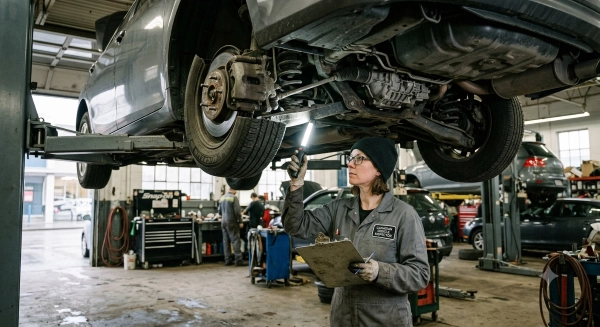
Brake pads, shoes, rotors and drums must meet Alberta’s minimum thickness and deep scoring or cracks can cause a fail. We inspect lines and hoses for rust, rubbing and leaks. The parking brake is tested on a hill and a brake meter to ensure it holds the vehicle. The ABS light has to come on at startup and then turn off. A light that stays on means the system has to be repaired before passing.
5. Tires and Wheels
Tread depth is recorded to verify that it satisfies the province’s legal minimum. Uneven wear can be indicative of other issues. Sidewalls cannot exhibit bulges, cuts, or exposed cords. Wheels are checked for bends, cracks, and missing or loose lug nuts. All tires must be the correct size and type for the vehicle, for example, no mixed winter and summer tires on the same axle.
6. Lighting and Electrical
According to inspectors, they test all external lights, including low and high beams, brake lights, indicators, hazards, reverse lights, and plate lights, as well as essential internal lights. Lenses must be clear enough, unbroken, and fixed. The horn, wipers, and defroster must function properly for safe driving in inclement weather. Dash warning lights, such as airbag and ABS, are required to illuminate briefly at startup and then turn off as designed.
7. Driver’s Compartment
Seat belts at all seating positions that latch and retract. Seats must be securely bolted and adjust without slipping. Mirrors must be crack-free and have steady mounts that are adjustable for the driver. Gauges, primary controls, and warning lights should function as designed, so the driver receives accurate information regarding speed, temperature, fuel, and malfunctions.
If the vehicle doesn’t pass, the owner has 10 days from the inspection date to make repairs and come back for a re-check. If returned within 10 days, the shop simply checks the items that failed. After 10 days, a complete new inspection must take place. After the vehicle passes, the Certificate of Inspection must be presented to a registry agent within 14 days. If it is not produced within that window, it is no longer valid and a new out-of-province inspection must be undertaken.
Common Reasons for Inspection Failure
Out-of-province inspections tend to target simple safety items that degrade. The majority of them stem from a few recurring problems inspectors encounter daily.
Brakes are one of the initial places inspectors look because weak brakes pose obvious safety concerns. Brake pads that have worn down to 2 millimetres or less will not pass inspection, even if they ‘feel okay’ during light city driving. Any vehicle with broken or insufficient brakes is going down too, whether that’s due to worn pads, warped rotors, leaky brake lines, or a spongy brake pedal that sinks a bit too much when pressed. Anything that pulls to one side under braking or makes grinding or squealing sounds will often trigger a closer look and can cause rejection until the system is repaired.
Tires are a common failure. Worn-out or damaged tires are among the most common reasons for inspection failure, particularly when the tread is low. Any tire with less than 3.5 millimeters of tread will fail the inspection. This applies to any tire on the vehicle, including a mandatory full-size spare if the local regulations require it. Cuts, bulges, exposed cords, or mismatched tire sizes on the same axle can be an issue. Even if a driver believes the car still “grips fine,” inspectors use tread depth and damage, not feel.
Inspectors check for other common defects that indicate sloppy maintenance or a safety hazard. Thin tires, worn brakes and cracked windshields are common failure points but not the exclusive ones. A vehicle’s suspension and steering system have to be in good shape to pass. Loose ball joints, leaking shocks or worn tie rods will be glaringly obvious on a road test or when on the lift. Exhaust system leaks or damage can cause your car not to pass if you have a hole in the muffler, a missing catalytic converter or pipes hanging too low. Rusted frames, leaking fluids from the engine, transmission or differential and faulty lights, If your vehicle fails because of worn mechanical components or structural defects, scheduling heavy-duty repairs before your re-inspection can help avoid additional delays. Rusty brakes and bald tires are an obvious no-no, but even vehicles with wrecked windshield wipers can fail because weather causing bad visibility is a legitimate danger, not a slight inconvenience.
Typical reasons for out-of-province inspection failure include:
- Brake pads that are 2 mm or below or other weak brakes
- Tire tread is less than 3.5 mm, or there are cuts, bulges, or exposed cords.
- Cracked or severely chipped windshields in the driver’s sight line.
- Rusted or weakened frame or subframe sections
- Leaking engine oil, transmission fluid, brake fluid, or coolant
- Faulty lights, turn signals, brake lights, or missing reflectors
- Loose or worn suspension or steering parts
- Exhaust leaks, missing parts, or unsecured exhaust components
- Worn or torn windshield wiper blades that streak or skip.
- Bad mods – such as off-road suspensions and lift kits without alignment.
- Incomplete collision repairs, like loose panels or bent structure
Improper modifications and unfinished repairs set off alarms. Cars that have been lifted or lowered without corresponding changes to steering and suspension, which can cause it to no longer track straight or wear tires in an irregular pattern, will fail. Loud exhausts that were chopped up for more noise can fail if they are too loud, leaking in the cabin area or missing mandatory emissions components. Incomplete body or frame repairs post-crash, such as bent crumple zones or missing structural bolts or airbag warning lights that won’t turn off, will frequently halt the inspection until a certified repair is completed and documented.
The Inspection Process Demystified
Out-of-province inspection in Alberta is a regimented, rule-driven evaluation of a vehicle’s compliance with provincial safety regulations that is necessary for vehicle registration.
- Verify that the vehicle is not exempt under the rule, such as the New West Partnership Trade Agreement.
- Grab the official Out-of-Province Vehicle Inspection Request form from an Alberta registry agent.
- Schedule an appointment at an authorized inspection center and forward the form information.
- Prepare the vehicle. It must be clean, empty, and fully accessible inside and out.
- A licensed technician checks all the big systems with the official checklist.
- You get a pass or fail report, with notes.
- If it fails, everything on the list must be repaired and re-inspected within ten days.
- Once everything passes, the inspector signs the inspection certificate.
- File this certificate with a registry agent and register in Alberta within 14 days.
Requesting the Form
It begins at an Alberta registry agent office, not at the shop. You need to have the official Out-of-Province Vehicle Inspection Request form prior to any licensed tech being able to carry out the inspection. Inspection facilities will generally not schedule you without it.
Bring evidence of ownership, like a bill of sale or past registration, along with state-issued ID. The agent uses these to tie the form to your particular vehicle. Since the form is only good for a limited time under provincial regulations, it makes sense to ask for it within a relatively small timeframe prior to your anticipated inspection date, as opposed to months in advance.
The Physical Inspection
A licensed technician inspects using the official Alberta checklist. They inspect fuel and exhaust systems, electrical systems, engine controls, steering, suspension, brakes, body, glass, and wiring. For instance, they might inspect for exhaust leaks, worn suspension bushings, or exposed wiring that could short.
The vehicle needs to be free of loose cargo or personal items that cover floors, seat mounts, or storage areas. All of the doors, hood, trunk, and any cargo compartments have to be unlocked and easy to open in order for the inspector to access every piece. At the end of the inspection, photos or digital notes might be taken to capture the vehicle’s condition and any defects for records and potential audits. The inspection generally lasts around two hours, although oversized vehicles or vehicles in worse condition can require extra time. Smaller, newer vehicles are a tad faster.
Handling Repairs
If the vehicle does not pass any aspect of the inspection, the report will itemize each failure. You must fix them all before the vehicle can pass. Albertan laws allow for 10 days from the initial inspection date to accomplish this and come back for re-inspection.
Safety repairs should take priority. Worn brake pads, damaged brake lines, weak tires, or rust that impacts the frame or crucial structural components all sit in this group and can prevent certification even if everything else checks out. It’s important to use certified technicians and quality parts, as only repairs made to standards will be approved. If you return the vehicle within 10 days, the technician only has to check the things that failed before, which saves them time and you money. If you miss that 10-day window, the prior results expire and you have to pay for and have a full new inspection from scratch.
Final Certification
Once all listed report items pass, the inspector finalizes and signs the inspection certificate. This certifies that the vehicle complied with Alberta safety requirements at the time of inspection and links specifically to your VIN.
You then need to take the signed certificate along with regular registration documents back to a registry agent to complete the Alberta registration. The certificate is good for 14 days and the vehicle has to be registered within that period or the certificate is no good. If the certificate is lost or expires, the province might demand a new inspection and a new certificate which entails undergoing the process once more and incurring the associated fees.
Beyond the Standard Checklist
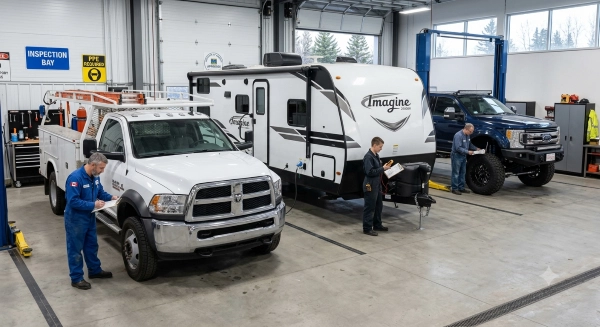
Out-of-province inspections need to do more than verify simple roadworthiness. The objective is to demonstrate the vehicle complies with Alberta’s safety and equipment requirements, which vary based on how the vehicle is utilized and how it’s been modified. Commercial, recreational and modified vehicles may be subject to additional inspections, and the inspection itself can last up to two hours, possibly longer for larger or more complex units. Prior to scheduling, it helps to glance over the particular criteria for your car type and assemble a quick list of skid marks or add-ons for the examiner, so nothing crucial is hurried or overlooked.
| Vehicle type | Extra focus areas |
|---|---|
| Commercial | Cargo securement, air brakes, weight ratings, logbooks |
| Recreational (RV) | Propane, electrical hookups, water systems, living area safety |
| Modified | Structural changes, engine upgrades, aftermarket safety impact |
Commercial Vehicles
Commercial vehicles are generally subject to more rigorous oversight given that they transport cargo or individuals and commonly cover significant distances. They examine cargo securement devices, air brake systems and driver logbook compliance because any failure here could cause safety and legal concerns. They check weight ratings, axle layouts and any commercial signage, ensuring the vehicle is not loaded in excess of rated limits and that markings adhere to local regulations.
Inspectors check adherence with Alberta’s commercial vehicle safety rules, so it’s smart to ensure your vehicle class, use, and plates all match up with those rules beforehand. A lit “Check Engine” or airbag light is an instant fail, which can cause a hold-up and add expense if the car has to come back for a second round.
Coming armed with recent maintenance and inspection history speeds the process along. Keeping up with regular fleet service and maintenance also reduces the likelihood of unexpected inspection failures and costly downtime. If the truck or bus fails, the owner has 10 days from the inspection date to fix it. When it comes back within that 10-day window, the shop just has to check off the failed items. If the Certificate of Inspection arrives after 14 days, it is no longer accepted and a completely new out-of-province inspection must be conducted.
Recreational Vehicles
RVs incorporate living systems on top of a standard chassis, so inspectors extend beyond mechanical components. They look beyond the basic checklist to propane systems, electrical hookups, and water tanks or lines for leaks, bad routing, or worn hoses that could cause fire or contamination.
Slide‑outs, awnings and leveling systems must move smoothly and lock in place, as failures here can cause injury at campsites or parking areas. Easy checks, such as ensuring slide seals are intact and jacks hold firm, tend to bypass delays.
Emergency exits, smoke and carbon monoxide alarms, and fire extinguishers need to be in place. Inspectors ensure that all of these living area systems comply with Alberta’s safety standards, so a brief self inspection prior to your booking streamlines the process and minimizes the possibility of return visits, which can count when inspection fees already differ by facility, locale, and vehicle size.
Modified Vehicles
When it comes to modified vehicles, you gain additional interest as modifications can impact safety systems and structural integrity. Any structural or performance work, such as suspension lifts, engine swaps or frame repairs, inspections will seek documentation and will fail a vehicle if the changes block airbags, seat belts or other core safeguards or if a warning light is on.
Common modification types and what inspectors look for include:
- Engine or tuning upgrades include tight mounts, no leaks, and smooth idle.
- Suspension or lift kits require the right geometry, no rubbing, and safe clearances.
- Brake upgrades – matched components, firm pedal, no warning lights
- Wheel and tire changes require a proper load rating and must ensure there is no contact with the fender or chassis.
- Lighting modifications include street-legal brightness and color, proper aiming, and reliable wiring.
Aftermarket parts have to be mounted properly with no loose brackets or exposed wiring and can’t interfere with steering, braking, airbag deployment or visibility. Creating a simple table before the appointment, listing each modification and its known compliance status, helps the inspector move faster and stay focused:
| Modification | Details / parts used | Known issues | Status |
|---|---|---|---|
| Suspension lift (50 mm) | Brand X kit, pro installed | None noted | Likely OK |
| LED headlight conversion | Brand Y, non‑OEM housings | Glare risk | Review |
| Engine tune | Software only, emissions kept | None noted | Likely OK |
As some heavy vehicles over 3,501 kg or some previously registered units may be exempt in a very limited fashion, check your status with the registry and the shop. Expenses vary greatly, so it makes good sense to compare rates prior to booking.
Preparing for a Successful Inspection
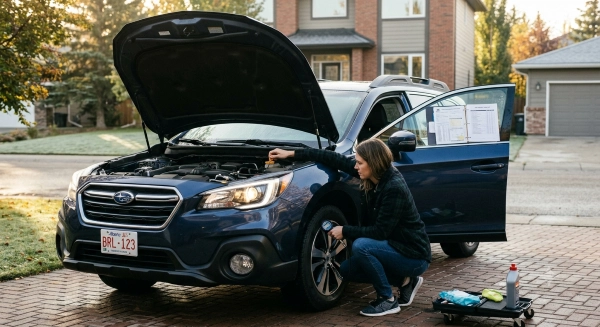
Begin with an easy pre-inspection checklist that runs through all the major systems. Go item by item: brakes, steering, suspension, tires, lights, glass, exhaust, and the basic structure of the body and frame. Listen for strange noises on a brief drive, pulling when you brake, or looseness in the steering wheel. Examine tire tread with a standard depth gauge or just a marked coin, and observe cracks or bulges. For the body, inspect for rust around critical areas, such as where suspension components fasten to the chassis. This type of ‘pre-flight’ home inspection doesn’t substitute for the out-of-province inspection, but it lets you catch obvious issues before you spend money on a test that is doomed to fail.
Make sure your vehicle is clean inside and out so the inspector can see and get to what they need to. A clean underbody and engine bay makes leaks easier to locate and less likely to be overlooked. Empty the trunk and back seats so seat belts, spare tire wells, and wiring are accessible. Clean the interior side of the glass so cracks or chips in the windshield stand out. This seems obvious, but it can save the visit, which frequently extends to 2 hours and beyond for bigger or commercial vehicles.
Have your documents waiting in one folder. That typically includes ownership, previous registration, and any previous safety or emission reports. Include service invoices that demonstrate work on brakes, tires, and major repairs. In most locations, a new vehicle will not require a pre-registration safety inspection. However, regulations differ, so consult local information and the relevant out-of-province inspection list to confirm. Remember that a certificate that is a few months old may not correspond to the car’s current condition, as parts and wear vary. Certain provinces will not even accept older reports.
Take care of little annoyances before the visit. Change out any dead headlight, brake, or plate light bulbs. Exchange weathered blades and refill engine oil, brake fluid, washer fluids, and coolant to indicated levels. If you’re already aware of a chipped windshield or super-thin brake pads, take care of those up front. In other words, when you’re coming from another province, you need to get the inspection done and passed before they’ll even let you register the vehicle under the new rules. If the car fails, you generally have a short period, say 10 days from the record of inspection date, in which to repair and return. You will be required to take the passed inspection certificate to a registry agent within a given time period, frequently 14 days of issue. If the car doesn’t pass initially, what you pay next depends on what needs to be repaired and if you stay with the same shop for repairs and re-test.
For additional information about vehicle safety standards and safe vehicle operation, Transport Canada’s Road Transportation Safety resources provide helpful guidance for Canadian drivers.
Conclusion
Out-of-province inspection may seem overwhelming. It involves distinct steps and defined regulations. The checks target actual safety hazards, not minor defects. That eliminates guesswork and stress.
A whole lot of time and money. Easy moves go a long way. Resolve obvious conflicts first, save a record nearby, and query if anything seems ambiguous. A quick conversation with a store or inspector can alleviate many minor concerns.
A car that passes does more than satisfy the law. It’s safer, it retains value better and provides more peace of mind on those long road trips. To keep prepared, schedule a fast checklist for your vehicle today and book your next check before the due date creeps up.
Frequently Asked Questions
What is an out-of-province inspection and why is it required?
An out-of-province inspection is a safety and mechanical inspection that you need when you register a vehicle from another province or region. It verifies that the vehicle is in compliance with local safety standards before it can be driven or insured.
What do mechanics look at during an out-of-province inspection?
Inspectors check key safety systems: brakes, steering, suspension, tires, lights, glass, frame, and sometimes emissions. They check the VIN and look for rust, damage, or modifications that may impact safety or compliance.
Why do vehicles often fail an out-of-province inspection?
Typical causes are worn brakes, suspension components, bald or mismatched tires, cracked windshields, worn wipers, fluid leaks and broken lights. Rust on structural components or unsafe modifications can induce a failure and need to be repaired.
How long does an out-of-province inspection usually take?
Once started, most inspections require 1 to 3 hours, depending on the vehicle and the shop’s schedule. Additional time might be necessary in case the mechanic needs to take off covers or panels or if follow-up testing is needed after repairs.
Can I drive my vehicle if it fails the out-of-province inspection?
You can typically only drive it to repair shops based on regional regulations. You have to repair all cited defects and come back for a re-inspection. Driving a car that fails on major safety items can be both illegal and unsafe.
How can I prepare my vehicle to pass the inspection?
Do simple regular maintenance first. Check all lights, wipers, horn, tires, and fluid levels. Repair known problems, like warning lights or leaks. If available, bring any service records and previous inspection reports to help the inspector get a sense of the vehicle’s history.
Do modified vehicles have trouble passing out-of-province inspections?
Yes, a few mods can send you to jail if they impact safety or aren’t locally approved. Suspension lifts, modified exhausts, tinted windows, and non-approved lighting could get singled out. It’s just smart to verify local regulations prior to inspection and tweak mods if necessary.