- Key Takeaways
- How Your Truck Battery Works
- Key Truck Battery Warning Signs
- Why Alberta’s Climate Is Tough
- Battery vs. Alternator Issues
- The Hidden Dangers of Neglect
- Proactive Battery Maintenance
- Conclusion
- Frequently Asked Questions
- What are the most common warning signs of a failing truck battery?
- How long does a typical truck battery last?
- How can I tell if it is the battery or alternator causing problems?
- Why do cold or hot climates affect truck batteries so much?
- Is it safe to keep driving with a weak truck battery?
- How often should I check my truck battery?
- What proactive steps can extend my truck battery life?
Key Takeaways
- A truck battery serves as the heart of the electrical system, leveraging lead plates and electrolyte to provide the juice for starting the engine and operating lights, electronics and accessories. Cold cranking amps are particularly crucial in chilly weather. Understanding how it functions aids you in identifying issues promptly and selecting the appropriate replacement.
- Typical battery trouble warning signs are slow engine cranks, dimming or flickering lights, dashboard warning lights, and random electrical glitches in windows, radios, and chargers. Consider these symptoms as warning signs to have your battery and charging system tested before a breakdown.
- Corroded terminals, a swollen or cracked battery case, and an old battery over about three to five years are all visible issues that suggest the battery is at the end of its life. Check the battery routinely and swap it out at the first sign of corrosion, bulging, leaking, or difficulty holding a charge.
- Climate extremes, particularly cold or hot, reduce battery life and make starting more difficult. Trucks operating in harsh climates require batteries with higher cold cranking amps and are tested more often. When you tailor your maintenance intervals to local weather, it’s less likely you’ll fall victim to no-start situations.
- Separating battery from alternator issues saves time and money, as a weak battery will generally result in slow starts. A failing alternator typically manifests through warning lights and electrical failures while driving. Use a voltmeter or pro testing to verify if it is the battery, alternator, or wiring.
- A little proactive care, such as testing, terminal cleaning, battery securing, and smart driving, can reduce the risk of roadside stranding, system damage, and safety hazards. Maintain a basic service diary and biannual checkups to prolong battery life and avert surprise expenses.
===
Truck battery warning signs are the subtle shifts that indicate a battery is weak, old, or near impending demise. Typical indicators are sluggish engine cranking, headlights dim at idle, clicking when you turn the key, or warning lights on the dash. Others observe power windows and locks shift slower or that radio and interior lights shut off when starting the truck. In many cases, these early stage signs can make themselves visible weeks before the battery fails. Catching them early helps prevent sudden breakdowns, wasted time, and tow fees. In the following sections, the guide walks through each warning sign in more detail and shows easy ways to test battery health.
How Your Truck Battery Works
Your truck battery keeps energy as chemical energy and converts it into electrical power whenever your truck requires it. When you turn the key or push the start button, it delivers a jolt to the starter motor so the engine can crank and start. Once the engine is going, the alternator handles most of the work, but the battery still assists by smoothing voltage and maintaining stability of power. It serves as a redundancy if the alternator encounters a problem, so the battery light can turn on and remain on if there’s a fault in the charging circuit.
Cold cranking amps (CCA) indicate the battery’s ability to provide high current in cold weather. Trucks, particularly heavy-duty ones, typically require a higher CCA rate because big engines require more power to crank. In cold weather, oil gets thick and engines become more difficult to crank, so a battery with low CCA may result in slow or weak starts, or may not crank at all. Even down south, a truck with multiple electrical accessories still fares better with a battery whose CCA meets the manufacturer’s specifications, so the starter receives consistent voltage and the battery isn’t stressed to its capacity on each start.
Consider the battery as the heart of the truck’s electrical system. It supplies power to lights, dashboard, radio, control modules, and safety systems with the engine off, and it helps smooth voltage with the engine on. The battery light may glow for a few seconds after startup as the system tests, then it goes out. If it remains on, that can indicate a weak battery or charging malfunction. For your truck battery, anything older than three years is good to get tested for strength so small voltage drops don’t translate into hard starts, dim lights, or random electrical glitches.
Within a typical lead-acid truck battery, lead plates bathe in an acid electrolyte slurry inside a rugged plastic housing. The plates and acid manage the chemical reaction that generates voltage, so damaged plates or low fluid can impair the battery’s capacity to store a charge. The case shields all the internals from heat, cold and vibration. On top, the metal terminals connect the battery to the truck. Corrosion frequently accumulates around these posts, especially in hot weather or in areas that remain warm most of the year. That white or blue-green crust can increase resistance and cause weak or no starts. A quick fix to this problem is a quick mix of baking soda and water, which cleans the corrosion so current can flow better. Working on the battery, the traditional safe sequence is to disconnect the negative (black) cable first, then the positive (red) cable. Connect positive first when reconnecting, then negative. If tests indicate the battery can no longer hold proper voltage or fails a load test, it may require complete replacement, not just cleaning or charging.
Key Truck Battery Warning Signs
Truck batteries don’t just ‘go’ without warning. Slow cranks, dim lights, and weird electrical behavior frequently appear days or weeks prior to a no-start, so catching these early saves time, money, and stress.
1. Slow Engine Crank
A slow or lazy crank when you turn the key is among the clearest signs the 12-volt battery under the hood is struggling or the alternator is not charging it well. The starter motor requires a healthy surge of current. When voltage dips, the engine cranks in a prolonged, stuttering fashion instead of a rapid, solid whirl.
Hear closely with every start try. If the engine hesitates for a few moments before firing, or you hear a low groaning or dragging noise instead of a crisp crank, the battery may not have sufficient reserve. Slow starts, day after day, are key truck battery warning signs for weak internal plates, sulfation, or charging issues, not a one-time fluke.
If slow crank keeps coming back, do a simple check: measure battery voltage, use a basic load tester, or try a careful jumpstart from a known good battery. If the truck cranks strong immediately after a jump but then fades again, that’s a good indication the battery or charging system requires some attention.
2. Dimming Lights
If you notice your headlights, dash, or interior lamps dimming or flickering when you start the truck or turn on high-draw devices such as the heater fan, it’s an indicator the battery may not be supplying sufficient volts or amps. Your lighting system is frequently the first location low voltage makes itself apparent.
Pay attention to lights that brighten when you rev the engine, then dim at idle. That swing can indicate the alternator is pushing hard to compensate for a feeble battery. Pay attention to any lag or drop in power to the radio, power windows or phone chargers.
In the case of dimming, specify which lights and devices dim and when. This brief checklist assists a technician in tracking down if the issue is primarily the battery, the alternator, or wiring.
3. Electrical Glitches
Sporadic electrical bugs, for example, frequently make their appearance prior to an outright battery failure. You may notice the radio reboot, the infotainment screen freeze, or interior lights pulse when you operate power windows. Heavy low-speed power steering in electric assist vehicles and fans that slow for no reason can be traced back to weak supply.
These symptoms can be from a low battery charge, a failing alternator or poor wiring connections that drop voltage under load. Racing power windows, phone chargers that continually reconnect and disconnect, or flickering dashboard displays are early signs that the electrical system is not receiving a steady feed.
When this happens, inspect basic items first: battery cables, ground straps, and fuse boxes. Check for loose clamps, frayed insulation, or heat-marked fuses and connectors. Knowing if the battery warning light remains on for the entire duration that the engine is running or only illuminates for a few seconds at ignition aids in zeroing in on the cause.
4. Corroded Terminals
Corrosion on the battery posts or cable clamps, typically white, blue or green buildup, can block current even if the battery itself still has plenty of charge. This gunk is prevalent on top of the terminals in hot summer months or warm climates, where heat accelerates chemical reactions and evaporation around the battery.
When corrosion gets thick, you can sometimes see hard starts, dim lights or random cut-outs as vibration makes the bad connection worse. The truck can behave as if the battery is dead even with voltage testing fine at rest.
It really helps to clean it. Remove the cables first, always taking off the negative (black) cable before the positive (red) cable to prevent short circuits. Use a battery-safe cleaning product or a baking soda and water mixture to scrub away deposits, then dry and tighten clamps. Light corrosion is generally repairable, but thick, crusted buildup that has corroded into the metal might require new terminals or, even worse, a new battery.
Neglecting this basic care can cause seemingly random breakdowns that are triggered by bad contact at the posts.
5. Swollen Battery Case
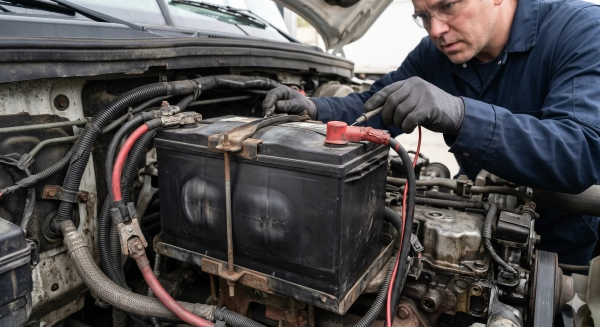
As soon as you see swelling, consider the battery unsafe to continue using. Don’t attempt to recharge it or tap the case to test it. Instead, get it inspected and replaced immediately, and have a technician test your charging system so the same issue doesn’t harm the new battery. A swollen case is generally the final visual warning before the battery fails outright.
6. Old Age
Though most truck batteries — under normal use — last about 3 to 5 years, age depends on climate, driving patterns, and load from add-on devices. Key Truck Battery Warning Signs As batteries age, their capacity declines, causing them to bounce back more slowly from short jaunts and drop in voltage more quickly when the truck rests. That manifests as tougher cold morning starts, more jumpstarts, or malfunctioning electronics after the engine has been off for a bit.
If your battery is over three years old and exhibiting warning signs like slow crank, dimming lights, or difficulty maintaining a charge overnight, replacement is generally cheaper than continual jumps and diagnostics. Note the install date somewhere accessible, like in a service log or on a small sticker near the battery, and schedule periodic inspections as it gets older.
A simple checklist helps here: note start sound (normal or slow), light behavior, battery warning light patterns, visible corrosion, case condition, and age. A warning light that never goes out suggests a more serious electrical problem. A warning light that flashes on for a few seconds and then extinguishes itself might be less pressing but is still worth monitoring. Disregarding these indicators can transform an easy battery swap into a roadside tow and a more expensive repair bill.
Why Alberta’s Climate Is Tough

Alberta’s climate is hard on truck batteries because it rapidly transitions between deep cold and dry summer heat. That constant change wears out parts inside the battery and shortens its life, even when the battery still looks good from the outside.
Alberta is famous for wild temperature fluctuations, and that’s not just a matter of human convenience. It affects how vehicles start and operate. Winter is tough on most regions, including Calgary, which experiences rapid, often overnight, temperature drops. When the temperatures drop, a truck battery can lose 30 to 50 percent of its capacity. A battery that cranks just fine at 10 degrees can seem feeble or die outright at minus 20 degrees, which is why no-start issues are so common after a cold snap or overnight deep freeze. Those brutal mornings strike senior trucks, city stop-and-go short hauls, and park-outside vehicles the most, as the battery never receives a deep charge and then must deliver a surge of power in the cold.
Calgary’s winters are a prime case in point. A lot of trucks do short city runs, stop-and-go in traffic, heaters and lights on constant, and then just sit outside at night. The alternator doesn’t have much time to fill up the battery. The very next morning, that same battery has to turn a cold, thick engine oil at sub-zero temperatures. Every hard crank in those conditions is a beat down. Early warning signs like slow starts, dim lights when you turn the key, or electronic glitches are more important here than in mild climates.
Alberta’s cold is not alone. Summer days can climb over 30°C. That heat accelerates chemical reactions within the battery, which may sound useful but in fact degrades it faster. Extreme heat can cause battery fluid to evaporate, plates to corrode, and even make the case swell up in some cases. Add in year-round temperature swings, including sudden warm chinooks in winter, and you get more stress: acid stratification, internal damage, and a higher chance the battery fails with little warning. For this reason, higher CCA batteries are a better match in Alberta, as they provide more cold starting power and a bit of extra buffer as the battery ages.
Battery vs. Alternator Issues
Truck battery warning signs can emanate from the battery or the alternator that charges it, and distinguishing the two saves time and money. Both age at different rates. A standard battery has a three to five year life span, and an alternator is good for seven to ten years in typical use, but heat, cold, and heavy electric loads can reduce that.
A bad battery will typically give you the first sign when you start the truck. If the engine cranks slow, you can hear a rapid clicking from the starter, or the interior lights or headlights look dim when turning the key on, then it may be battery-related. These symptoms are typically more severe after the truck sits overnight or in very cold or very hot temperatures. Batteries wear out faster in extreme temperatures, so a 4-year-old battery in a tough climate could be borderline. With the engine off, a good fully charged battery will read about 12.6 volts using a simple digital voltmeter on the posts. If it reads much lower and does not hold a charge, the battery itself is probably weak.
A failing alternator makes its presence known more while you drive. Typical symptoms are a battery warning light on the dash and headlights that are dim or flicker at idle but get brighter as you rev the engine, as well as other electrical failures like power windows that slow down or radios that cut out. One of the most common indicators is a battery that keeps dying, even after recharging or replacing. If the engine is running, a healthy alternator generally measures 14.2 to 14.7 volts at the battery, but the exact figure varies by manufacturer. If the alternator ceases charging, the truck runs until the battery is drained, sometimes just a few minutes and sometimes an hour or two. You might hear whining, grinding, or growling from the front of the engine or smell a hot, burning rubber odor in the vicinity of the belt.
- More likely battery: * Slow crank only after sitting or in cold.
- Fast clicking, no crank, then starts after jump.
- Close to or below 12.6 volts engine off and falling fast.
- Truck runs fine once started, with steady lights.
- More likely alternator: * Battery or charging light on while driving.
- Lights dim or pulse with RPM.
- New or charged battery keeps going dead.
- Battery or alternator problems and very low voltage below 14 volts with engine running.
- Whining or burning smell near alternator or belt.
The Hidden Dangers of Neglect
Neglecting truck battery warning signs is more than a slow start. It increases the likelihood of sudden failures, decreases battery lifespan, and can harm systems that are infinitely more expensive than a basic swap. A hearty battery hovers around 12.60 volts. When it dips toward 12.40 and lingers, that initial decline is a frequent harbinger of a dying unit. To treat that as ‘normal’ can transform a cheap fix into a long repair bill.
Stranding Risk
A weak battery often gives small clues first: dimmer headlights at idle, sluggish cranking in the morning, or electronics that reset for no clear reason. When those signs get overlooked, the destination is identical—a no-start truck in a yard, loading dock, or highway shoulder. Because most batteries only last 3 to 5 years in typical use, pushing them well beyond that without inspections increases the risk that the truck just won’t start one day.
For commercial drivers, a dead battery is not just a nuisance. It can translate to missed delivery windows, lost kilometers on the schedule, and fines from customers who depend on timely shipments. Even for non-business use, a roadside truck can mean tow fees, delays, and rescheduling, all because of a component that’s cheap relative to downtime.
Simple habits reduce that risk. Routine load tests, visual inspections for corrosion or loose clamps, and monitoring for warning signs such as dimming lights all assist in identifying issues promptly. As a just-in-case, jumper cables, a portable booster or battery tender can save a start-fail from becoming road drama when a start goes south unexpectedly.
System Damage
Running your truck with a weak or faulty battery forces the alternator to work harder than intended. The alternator wastes a significant portion of its time attempting to recharge a battery that may never get back to full capacity. This can cause overheated windings, worn bearings, and alternator failure. Swapping out an alternator and the associated labor generally runs way more than swapping a tired battery in time.
Low or unstable voltage can disrupt sensitive control units, lighting modules, and even digital dashboards. You might notice intermittent fault codes, blown fuses or actuation glitches from powered accessories. Repeated jump starts or quick, improper charging put even more stress, cutting short the life of both battery and charging system. Scheduling regular diagnostic visits, including voltage tests, alternator output checks and scan-tool inspections, catches this type of system damage before it spreads.
Safety Hazards
A neglected battery doesn’t fail in a clean way every time. Overcharging, internal faults, or old age can cause swollen cases, acid seepage around the caps, or corroded terminals that show leakage. Sometimes damaged wiring or loose connections create shorts that can actually spark, melt insulation, or in uncommon but very real cases, cause fires near the engine bay.
When voltage dips hard under load, safety-critical systems can take a hit. Headlights can dim against the night, scrambling sight. Hazard lights may flicker feebly. Power steering or power-assisted brakes in certain designs can act erratically if the electrical system crashes. In extremes of heat or cold, where starting and electrical loads are elevated, a dying battery increases the risk even further because getting stranded on the roadside adds exposure to the elements and traffic.
Any hint of swelling, leaks, burning smells or repeated shocks while working near the battery is an immediate cause for concern. In those instances, the highest precaution is to detach the battery gently, steer clear of sparks, and get it swapped out and the system examined immediately.
Proactive Battery Maintenance

Proactive care catches weak truck batteries before they strand you. With routine inspection, testing, cleaning, and intelligent upgrades, you can extend service life far beyond the typical three to five years, even in harsh climates where heat, cold, or heavy use push the electrical system to its limits. A whiteboard-style maintenance log recording age, test results, and service dates helps you notice small changes early that can signal trouble, especially after the battery’s third year, when annual checks become more critical and early failure is more prevalent.
Basic steps for regular truck battery care:
- Inspect battery, cables, and mounting hardware.
- Test voltage and load, plus alternator and starter output.
- Clean terminals, posts, and the battery case.
- Apply terminal protectant and check insulation or heat shields.
- Confirm battery is firmly mounted and vibration is limited.
- Log test results, dates, and any work done.
- Reconsider battery type. Upgrade to heavy-duty or AGM if loads are elevated.
Upgrading to heavy-duty or AGM batteries can assist trucks that operate numerous electrical add-ons, like liftgates, inverters, additional lighting, or refrigeration units. These designs resist deep cycles better and tolerate vibration and heat more dependably than standard starter batteries. Insulation sleeves or shields are handy in hot areas, where under-hood temperatures can top 200°F and gradually dehydrate a battery from within.
Regular Testing
Battery testing a couple times a year provides a health snapshot and catches any feeble cells that may not have developed warning signs yet. Beyond the third year, professional tests each year are strongly suggested, even if the truck does start.
A basic voltmeter check indicates resting voltage, while a proper load test determines how the battery behaves under starter-like demand. A lot of shops will do a fast or free battery check that tests cold-cranking amps, alternator output, and starter draw in a single visit.
We run alternator and starter tests in the same session to eliminate charging or crank issues masquerading as a bad battery. A slow crank on start-up could indicate a feeble battery, a fading starter, or losses in the cables.
Record every test: date, miles, voltage, load test, comments. This history reveals patterns, such as gradual declines in cranking strength, that predict failure before the truck will not start.
Consistent Cleaning
Dirty or corroded terminals waste power and can impersonate a dying battery. Cleaning eliminates this resistance and allows the starter to experience as much current as the battery can provide.
About proactive battery maintenance: wipe the case and top to remove dirt, dust, and dried acid that can create leaky paths for current and slowly discharge. Take a brush and a mild baking-soda solution on corrosion, then dry it well.
Once cleaned, a light application of terminal grease or a spray-on protectant helps inhibit new corrosion. This is handy in coastal regions or where they salt the roads because salt and moisture accelerate acid and rust build-up.
I schedule cleaning alongside engine oil or filter changes so it doesn’t get skipped. When the battery is exposed, inspect cables for cracks, swelling, or loose clamps that could lead to voltage drop.
Secure Mounting
If your battery is loose, it will shake, crack its internal plates, and fail prematurely even if the charging system is pristine. High vibration use, such as rough roads or constant off pavement work, makes secure mounting even more critical for trucks.
Inspect hold-down brackets, trays, and straps to ensure a tight fit, check for rust or damage, and replace hardware that no longer clamps firmly. A worn tray can allow the battery to shift a couple of millimeters, which really accumulates over thousands of kilometers.
Since unseen internal damage seldom provides obvious notice, include a fast mounting and cable inspection in pre-trip walk-around checks. Check any insulation wraps, ensuring they continue to cover the case without chafing through.
Smart Driving
Driving habits mold battery life as much as the hardware. Too many quick trips do not give the alternator adequate time to recharge the battery after every crank, which can leave it undercharged for days.
Lights, the HVAC blowers, stereo, or inverters being used heavily for extensive periods with the engine off will kill your battery without assistance from the alternator. If you’re parked for long stretches, pare down the electrical loads or use a smart charger to keep the battery topped off.
Regular longer drives keep charge levels steady and help avoid the trickle discharge of long storage. This is especially critical for fleets that idle between jobs or for seasonal trucks that experience downtime.
The extreme heat and cold both put stress on the battery and charging system. In extreme heat, park in shade, insulate, and check voltage more frequently. In deep cold, give the engine a little longer run time so the alternator can recuperate from hard starts. Not all dying batteries provide obvious clues, so this habit is important even when all appears well.
Conclusion
Your truck battery provides obvious warning signs prior to dying. Slow starts, dim lights, odd smells, and warning lights all indicate an issue that requires immediate attention. Alberta’s cold and heat accelerate wear, so minor problems become major quickly.
Wise drivers examine the battery on a routine basis, wash the posts, and check the charge prior to extended outings. That practice buys time, money, and peace of mind on the road.
See one of the warning signs from above? Chat with a reliable shop, grab a quick test, and schedule the next step. Be proactive, not reactive so your truck powers up and out of the lot, not stuck in it or on the side of the road.
Frequently Asked Questions
What are the most common warning signs of a failing truck battery?
Dim headlights, sluggish engine cranking, clicking when starting, and electrical issues in the cab are all major indicators. You’ll see warning lights on the dash. If these come together, get the battery checked immediately.
How long does a typical truck battery last?
On average, truck batteries last three to five years. Harsh heat or cold, lots of short trips, and heavy electrical loads can reduce life. If your battery is more than three years old, arrange for periodic tests to prevent sudden failures.
How can I tell if it is the battery or alternator causing problems?
If the engine cranks slow or not at all and accessories work, it’s usually the battery. If your lights flicker as you drive or the battery drains even after a charge, your alternator could be on its way out. A professional load test verifies the cause.
Why do cold or hot climates affect truck batteries so much?
Extremely cold temperatures deplete battery strength and make engines more difficult to start. High heat accelerates internal battery wear and fluid loss. Both extremes cause batteries to die earlier. Climate-conscious maintenance staves off unexpected battery demise.
Is it safe to keep driving with a weak truck battery?
It’s dangerous. A weak battery can die without warning. It can strain the alternator and other electrical components. At the initial warning signs, test and replace the battery if necessary.
How often should I check my truck battery?
Test your battery twice a year and prior to long haul trips. Check for corrosion, loose connections, and damage. Many garages and service centers provide fast battery checks to spot issues early.
What proactive steps can extend my truck battery life?
Keep terminals clean and tight, drive long enough to fully recharge, don’t leave lights or electronics on when parked, and protect the battery from extreme temperatures when possible. Routine checkups aid in finding issues early.
Need help keeping your truck or fleet road-ready? Browse our service resources for professional repairs, diagnostics, and preventative maintenance designed to keep your commercial vehicles performing safely and efficiently.
Fleet Services and Preventive Maintenance
Want to learn more about commercial trailer safety, inspections, and transportation regulations? Explore these reliable government and educational resources:
Safety Rules, Regulations and Permits for Commercial Transportation.