- Key Takeaways
- What Are Hi-Rail Inspections?
- Why Inspections Are Critical
- Alberta’s Unique Challenges
- The True Cost of Negligence
- Beyond the Basic Checklist
- Choose Professional Servicing
- Select qualified mechanics and technicians experienced in hi-rail systems and inspection standards.
- Trust Hart Transmission and Mechanical for comprehensive diagnostics, repairs, and maintenance services.
- Schedule regular inspections with a reputable shop to ensure full compliance and operational reliability.
- Contact our team for expert insights, fair pricing, and minimal downtime for your rail and commercial vehicles.
- Conclusion
- Frequently Asked Questions
- What are hi-rail inspections?
- How often should hi-rail vehicles be inspected?
- Why are inspections critical for safety and uptime?
- What makes Alberta’s conditions challenging for hi-rail fleets?
- What is the real cost of skipping inspections?
- What goes beyond a basic hi-rail checklist?
- Why choose professional hi-rail servicing?
Key Takeaways
- Hi-rail inspections check rail gear, steel guide wheels, and mode change systems and encompass mechanical, hydraulic, pneumatic, and electrical components. Plan hi-rail inspections.
- Concentrate on guide wheel alignment, wear, and secure mounting. Test braking performance on track to validate safe stopping distances. Grease moving parts and record all results to help back up compliance audits.
- Test hydraulic pressure, hoses, actuators and pneumatic controls for leaks and responsiveness. Confirm frame, suspension and mounting points are free of cracks or misalignment. Swap out worn parts before they fail!
- Make sure electrical and safety systems like lighting, alarms, beacons, and backup alerts operate dependably. Check battery condition and wiring. PPE, hi rail inspections, emergency kits, and first aid supplies are all part of pre-shift safety huddles.
- Tailor inspection frequency for extreme cold, snow, rough terrain, and heavy industrial use. Track corrosion, contamination, and accelerated wear and implement preventive maintenance according to operating hours and data trends.
- Stay compliant with proper record keeping and approved inspection intervals to avoid fines, downtime, and reputation damage. Use certified technicians or professional services to simplify compliance and minimize lifetime costs.
About Hi rail inspections Hi rail inspections are conducted by roadway maintenance vehicles with rail gear to run on the tracks. They are used to check track condition, geometry, and safety features quickly and have the ability to access many areas along the rail corridors. These cover gauge, alignment, crosslevel, rail head wear, joints, fasteners, ballast support, and clearances. Crews capture defects with GPS tags, photos, and notes, then score severity for work plans. To comply with standards, teams adhere to published regulations, such as FRA Track Safety Standards in the US, and utilize calibrated instruments along with onboard sensors. Weather, traffic windows, and sight lines influence when and how. In reality, findings connect to work orders in asset platforms. The next sections describe techniques, necessary equipment, data pipelines, and usual blunders.
What Are Hi-Rail Inspections?
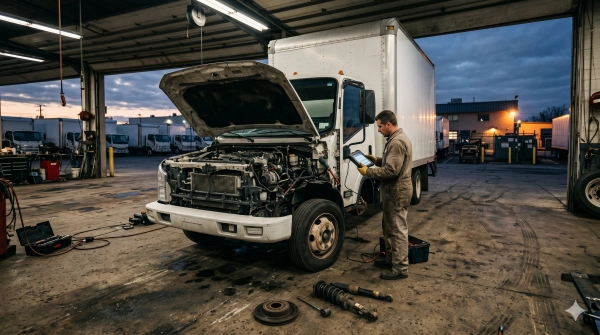
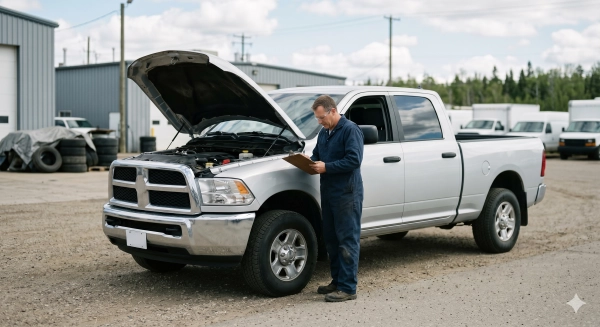
Hi-rail inspections ensure road-rail vehicles remain safe and compliant before, during, and after track travel. Hi-Rail refers to trucks and other equipment equipped to travel on rails as well as roadways. Inspections include key systems, logging defects, and scheduling service intervals to keep the asset dependable and compliant on live rail.
- Rail gear, steel guide wheels, and mode change mechanisms
- Mechanical, hydraulic, pneumatic, and electrical systems
- Brakes, speedometer, horn, lights and beacons, RGS, tire tread
- Backup alarms, 360° intermittent warning signals, direction alarms
- Mounting points, fasteners, and Hi-Rail assemblies for loose or missing parts.
- Battery, wiring, fluids, and emergency kits
Inspections must be done at minimum once a year, and no more than 14 months can elapse between exams. Meanwhile, high utilization fleets may require inspections every 3 months or 5,000 KM. Some regions apply Rail Safety National Law and AS 7502:2016, which call for routine inspection and maintenance. If a part doesn’t perform, limited use may be permitted for 7 days if the defect is labeled, dated, and recorded for an approved inspector.
1. The Guide Wheel System
Examine guide wheel alignment, wear patterns and secure attachment. Misalignment can pull the vehicle off the rail head.
Inspect steel wheels for cracks, flat spots and track gage. Employ a calibrated gage tool and compare with the line’s norm.
Inspect the rail gear during road-to-rail changeover. The autopilot must sink without loss.
Grease pivots, bushings, and slides. Any bind or heat marks indicate pending failure.
2. Hydraulic and Pneumatic Checks
Test hydraulic pressure at specification, scan hoses and fittings for leaks, and confirm relief valve function. A minor weep can become a geyser in no time under load.
Check pneumatic controls for timely response and zero air leaks. Listen for a hiss at joints.
Check the lifts and actuators that deploy rail gear. Cycle underweight and then test for drift.
All components must satisfy the minimum safe thresholds cited by the manufacturer and applicable regulations.
3. Frame and Suspension Integrity
Inspect the frame for cracks, corrosion, and twist. Be very attentive around rail gear mounts.
Inspect springs, shocks, and bushings for wear. Poor load share wrecks on-track stability.
Check that all the mounting points are secure and not damaged. Swap out strained bolts.
Verify that axles and wheels are properly aligned for road and rail. Mixed-mode misalignment manifests as uneven tire wear.
4. On-Track Braking Tests
Conduct dynamic brake tests and capture stopping distance at designated speeds in relation to the line’s boundary.
Examine pads, discs, and drums for wear and heat checks. Substitute under the designated minimum.
Test the emergency brake and backup alarm on rail load. Ensure consistency.
APPEND results to inspection log with date, speed, grade, and rail state.
5. Electrical and Safety Systems
Test all circuits: headlights, work lights, beacons, and 360-degree intermittent warning signal. Confirm signals are not the same as other alarms.
Direction alarms and backup alarms trigger in each mode. Test horn loudness.
Battery health, cables, and grounds to check. Loose grounds cause false faults.
Verify engine fluids are in range and clean. Maintain a sealed emergency kit on board.
Why Inspections Are Critical
Inspections avert unnecessary incidents, derailments and expensive failures by detecting wear, leaks and control problems before they mushroom. Regular checks are a legal duty under frameworks like 49 CFR 214 (United States), the Rail Safety National Law National Regulations, and AS 7502:2016 (Australia). Inspection saves lives, rolling stock, work sites and rail infrastructure. Preventative maintenance reduces total lifetime cost with fewer breakdowns, optimal parts cycles, and less unscheduled downtime.
Operator Safety
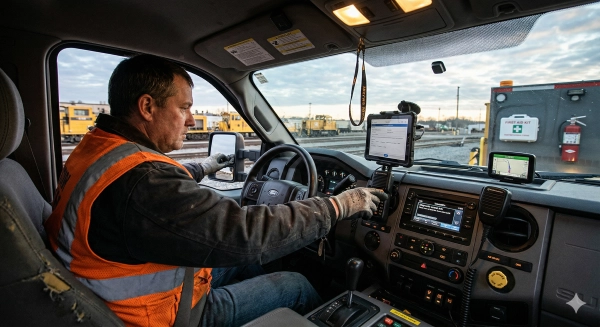
Conduct a brief safety meeting before each shift. Cover route hazards, track authority, speed limits, work windows, radio channels, and weather impacts. Identify emergency roles and verify who has dispatch access.
Inspect the first aid kit, eyewash, fire extinguisher, spill kit, and wheel chocks. Put them within easy reach, label and log expiry dates. Swap out used or expired items immediately.
Inspect operator licenses, physicals, and last hi-rail and 3-point contact training. Maintain records up to date for audits and spot inspections.
Regulatory Compliance
- 49 CFR 214 (on-track safety)
- Rail Safety National Law National Regulations
- AS 7502:2016 (hi-rail vehicle requirements)
- Local rail operator network standards and site rules
Maintain traceable inspection records: date and time, location, odometer and on-track kilometers, inspector qualifications, checklists, defects, corrective actions, parts used, and return-to-service sign-off. Keep them digitally with version control and backup.
Follow set frequencies: prestart checks each shift, periodic inspections at least annually and no more than 14 months apart, and higher-usage cycles such as every 3 months or every 5,000 kilometers. Record any risk-based deviations.
Non-compliance can result in fines, track access suspension, incident liability, and reputational damage.
Operational Reliability
Create regular habits by context and task loop. Coastal fleets corrode. Desert or arid sites find cracked hoses. Cold areas batter batteries and seals.
Use findings to plan preventive work: coolant swaps, dryer cartridge changes, filter cycles, and wheel/roller alignment. Book in off-peak windows.
Monitor vital systems — brakes, hydraulics, rail gear pins, electrical looms, tires, couplers — for pre-failure indicators. Trend inspection data to identify recurring defects.
Feed metrics into spares plans and replacement timing. If failures spike and downtime grows, move up the vehicle refresh to safeguard uptime and expenses.
Alberta’s Unique Challenges
Alberta’s short-line rail network covers vast distances and severe climate fluctuations, which influence how hi-rail inspections must operate. Extreme cold, heavy snow and freeze-thaw cycles put stress on hydraulics, electronics and steel. With defect trends on the rise, rail defects per 160 kilometers tested rose from approximately 2.14 in 2000 to 11.79 in 2002, remaining near 11.53 in 2003. Tighter routines were needed. Bad ballast pockets, rough with checking and shelling, and industrial traffic load all increase risk for rail breaks, split heads and transverse flaws. Hi-rail teams need to tune schedules, methods and tools to these realities.
Extreme Weather
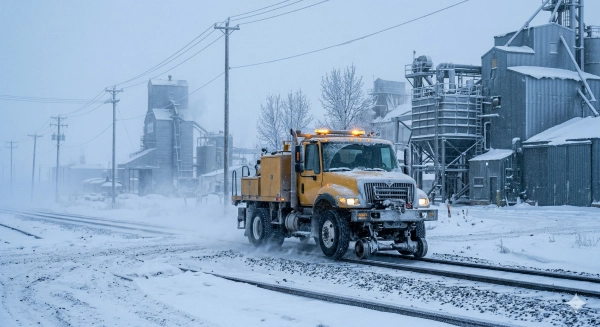
Check door and cylinder seals, wiper rings and breather caps. Take winter grade fluids with pour points equivalent to site standard. Test block heaters, cab heaters, and battery warmers and log actual warm-up times instead of estimates.
Salt, slush and meltwater cause corrosion. Check connectors for moisture ingress, look for white rust at aluminum-steel interfaces and pull covers to inspect relay and PCB housings.
In freeze-thaw seasons, switch to shorter inspection cycles. Include fast inspections post-storm to detect potential ice accumulation on sensors and rails that could mask bolt hole fissures and fractured joint bars associated with cold snaps.
Demanding Terrain
Alberta’s own unique challenges include rough track, heaves, and soft ballast that can batter undercarriage parts. Check suspension bushings, mounting plates, and rail gear pivots for play and cracks.
Tires and road wheels get belted by gravel access roads and grade crossings. Check for sidewall cuts, wheel flat spots, bent rims and frame tweaks around tow points.
Clearances and alignment are a concern on curves and grades. Check rail gear gauge, toe-in, and shimming so contact remains even and reduces derailing risk, particularly on tangent track with joints.
Remote sites lead to fewer lifts and longer runs. Pack spare seals, hoses, and heater elements, and schedule mobile service windows timed to weather windows.
Industrial Wear
Oil sands, forestry and bulk freight translate into heavy duty cycles that accelerate the wear of pins, bushings and rail wheels. Track real on-rail hours and cycles, not just elapsed calendar time.
Dust, chemicals, and byproducts foul systems. We need to clean up couplers and harnesses and put on shields where splash is an everyday constant.
Abrasive grit scratches rod surfaces and leads to leaks in hydraulic and pneumatic lines. Pressure test circuits, check filters, and swap early when iron or silica counts rise.
Heavy-use fleets require more frequent intervals and rail-centric inspections. Combine ultrasonic testing with timely rail grinding to remove checking and shelling that can hide defects. Monitor for transverse defects and vertical split heads following cold snaps.
The True Cost of Negligence
Hi-rail inspections ensure the state of road-rail vehicles, their rail gear, brakes, hydraulics, and safety systems. Missing them increases risk, cost, and legal exposure throughout the life of a project.
- Safety exposure: Undetected defects raise the odds of derailments, collisions, and harm to people and assets.
- Legal risk: Non-compliance draws fines, sanctions and possible license suspensions.
- Direct costs: Emergency repairs, towing, and part replacements cost more than planned service.
- Downtime: Projects stall, crews wait, and access windows close.
- Insurance and contracts: Premiums rise, claims get denied, and clients walk.
- Reputation: Trust erodes, media scrutiny grows, and recovery is slow.
Catastrophic Failures
Derailments, level crossing crashes and system outages can all be the result of overlooked inspections of wheel profile, gauge or locking pins in the rail equipment. Even a worn flange or loose pivot can shift tracking by millimeters, but that’s all it takes to climb a rail at 25 km/h under load.
Small hydraulic leaks become loss of lift or steering on track. Heat, vibration, and metal fatigue propagate and emergency stops do not work if brake fluid is low or lines are cracked. Crews encounter jammed hallways, broken handrails, and potential injury.
Actual incidents such as cracked hi-rail arms that collapsed under braking, seized bearings that overheated and sparked fires, and misaligned guide wheels that derailed trucks from the head of rail. If any safety item is past due—brakes, tires, rail gear pivots, fail-safes—pull the unit, lock it out and repair before use.
Financial Penalties
Regulators can fine per day, per vehicle and per breach, totaling tens of thousands of EUR or USD for repeat issues. Emergency repair of a failed hub can cost EUR 8,000 to 15,000, while a scheduled bearing set and fluid change might cost EUR 600 to 900.
Fake audits can void insurance for an incident, spike premiums by 10 to 25 percent, or trigger contract penalties. Regular checkups are cheaper than a single catastrophic breakdown and safeguard your cash flow.
Project Downtime
Unplanned breakdowns halt track work, foul slots and delay trains. Crews wait, traffic windows expire and access fees accumulate.
Every wasted day can incinerate €5,000 to €20,000 in manhours, equipment leases, and fines. If you have to source a custom cylinder or control valve, the lead time could be three to ten days.
The real expense of carelessness. Maintain up to date inspection logs, torque values, and parts receipts to quickly approve orders, fast order parts, and get wheels back on rail faster.
Reputational Damage
Safety violations make the headlines, and stakeholders connect lapses to poor governance. Clients keep track of incident rates and audit scores.
Contracts frequently score safety records. A bad record can knock bidders off shortlists. Transparent logs, third-party certificates, and near-miss reporting demonstrate control and care.
Employing certified inspectors and publicly broadcasting compliance dashboards demonstrates consistent standards to owners, insurers, and crews.
Beyond the Basic Checklist
Passing the ultimate pass/fail checks requires coupling experienced people with data and solutions that expose risks ahead of time, reduce downtime, and keep hi-rail operations safe across landscapes, load weights, and weather conditions.
The Human Factor
Well-trained eyes still catch what sensors miss. Don’t just stick to the standard inspection checklist. Educate your inspectors and drivers on how to recognize steering feel drift, irregular tire wear, sluggish hydraulics, faint knocks at idle and small delays in brake release, for example. On track, stress indicators include wheel climb marks, tight gauge shine, scalloped head wear and uneven contact on insulated joints.
Create pipelines for blunt feedback from mechanics spotting recurring errors. Pair that with independent validation. Cross-pollinate teams across depots, rotate routes, and demand cross-check sign-offs for crucial discoveries. This minimizes blind spots.
Go beyond the simple to-do list. Short pre-shift briefs, clear stop-work authority, and simple near-miss forms increase reporting. Reward early flags, not just fixes.
Track near-misses with photos, time, location and conditions. Periodically review to update checklists, tweak torque specifications or change inspection order so high-risk items come first.
Predictive Data
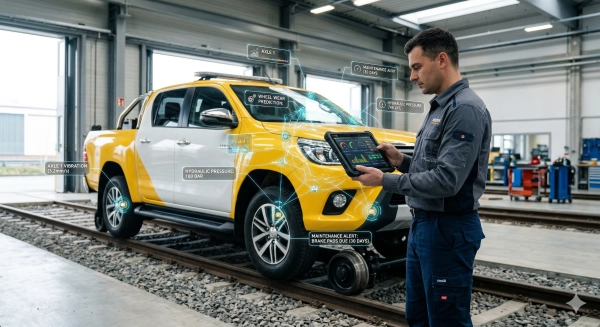
More than single readings, what matters are trends. Head check growth in rail head checks per 1,000 meters, watch growth in rail head checks per 1,000 meters, rising axlebox temperature deltas, repeat gauge narrowing at the same curve, or mounting harmonic peaks greater than 20 Hz on rough territory.
- Map assets and failure modes.
- Centralize data from vehicles and track tools.
- Clean and tag by location, weather, and load.
- Set baselines and thresholds.
- Score risk by rate-of-change.
- Schedule work by risk and access.
- Close the loop with post-fix data.
| Indicator | What it suggests | Interval (weeks) |
|---|---|---|
| Head check density ↑ | Surface fatigue | 1–2 |
| Gauge narrowing >2 mm | Tie/fastener issues | 1 |
| Axlebox temp +10 °C | Bearing wear | 1 |
| Vibration RMS ↑ 25% | Wheel/track mismatch | 2 |
| GPR voids recur | Ballast loss | 2–4 |
Future Technologies
Next-gen hi-rail units transport third rail measurement probes, phased-array UT, eddy current arrays, LiDAR and high-speed cameras. This stack detects subsurface composition cracks and geometry faults at faster speeds and enhances coverage.
AI tools triage signal noise, defect flag patterns, and suggest priority sequences. Begin with assisted review. Then transition to model-driven scheduling after accuracy is demonstrated on your routes.
Digitize records with cloud logbooks, e-sign work orders, and geo-tagged photos. Auto-link findings to standards and generate audit trails on demand.
Follow releases from incumbent rail NDT vendors and standards organizations. Pilot, measure precision and lifecycle cost, and then scale what demonstrates value.
Choose Professional Servicing
Professional servicing keeps hi-rail vehicles safe, compliant and ready to work every single day. It ensures road-rail systems pass inspection and that every unit operates cleanly, stops on cue and stays on track with no unexpected failures.
Select qualified mechanics and technicians experienced in hi-rail systems and inspection standards.
Go with professionals who understand rail gear, frame interfaces, brake interlocks and electrical tie-ins. They ought to adhere to traditional rail inspection standards and be able to spot wear on guide wheels, pins, bushings and mounting plates. A comprehensive service inspects for loose or missing components, confirms warning lights and backup alarms, and tests road-to-rail changeover. Request evidence of training, a sample inspection sheet, and torque specs utilized on key fasteners. For instance, a good shop will measure wheel back-to-back, check flange wear against limits in millimeters and record every adjustment. That degree of attention to detail decreases the chance of crashing and increases longevity.
Trust Hart Transmission and Mechanical for comprehensive diagnostics, repairs, and maintenance services.
Hart Transmission and Mechanical offers cradle-to-grave care: diagnostics, scheduled service, and repair. Anticipate yearly or bi-annual servicing which involves hydraulic checks, wheel alignment and balancing, brake tests, and wiring. They can service the team, refurbish rail gear, replace worn guide wheels, and reset ride heights to keep geometry in spec. If a backup alarm fails, they can install a compliant one that same day and record the replacement for audits. These reports have photos, metric measurements, and parts lists, so records remain transparent and accurate.
Schedule regular inspections with a reputable shop to ensure full compliance and operational reliability.
Schedule inspections at a minimum every 12 months and never have more than 14 months pass between inspections. A lot of fleets schedule twice-a-year inspections on high-mile units. For example, if a regulation permits 7 days of service with a small defect, label the equipment, assign a repair-by date, and restrict operation until repaired. Keep maintenance records for each vehicle: dates, findings, readings, and repairs. These files fuel compliance, trend tracking, and resale value.
Contact our team for expert insights, fair pricing, and minimal downtime for your rail and commercial vehicles.
Contact us for a professional servicing plan tailored to your duty cycle, terrain, and climate. Query for response time, 24-hour support, and parts stocking levels, so downtime is minimal and your budget stays intact. Defined scopes, fixed quotes, and rapid turnaround keep crews working and assets in service.
Conclusion
Hi-rail inspections deliver. There are fewer breakdowns. There are fewer close calls. There is more uptime, and teams operate with reduced stress and more actionable insights. Alberta throws in cold, ice, and long runs, so small gaps become big, fast. Real checks catch worn flanges, loose mounts, weak hydraulics, cracked frames, and soft tires. That keeps trucks safe on and off track.
To control costs, determine a fixed pace for inspections. Record every fault by date, part, and repair. No use of torque specs. Make use of gauge blocks. Swap parts before they blow. Train crewmembers on lockout policies and jobsite hazards. Select a pro shop with rail expertise and most importantly evidence of work!
Wish you had better control over risk and spend? Contact for a plan that fits your fleet.
Frequently Asked Questions
What are hi-rail inspections?
Hi-rail inspections check road-rail vehicles and their rail gear for safety and compliance. Technicians inspect braking, steering, condition of the rail wheels, wheel alignment, electrical systems, and emergency equipment. These inspections help avoid derailments, protect crews, and keep things on track.
How often should hi-rail vehicles be inspected?
Do pre-trip checks every day, and a full inspection at least every six months. High-use or harsh environments might necessitate quarterly inspections. As with hi-rail inspections, always adhere to manufacturer recommendations and relevant standards from regulators and rail administrations.
Why are inspections critical for safety and uptime?
Inspections detect wear, misalignment, and hydraulic or electrical failures early. This wards off derailments, track damage, and expensive shutdowns. Preventative service saves lives, reduces liability, and keeps projects on time and on budget.
What makes Alberta’s conditions challenging for hi-rail fleets?
Alberta’s temperature fluctuations, snow, ice, and gravel roads cause wear faster. Corrosion, traction loss, and hydraulic seal failures are frequent. Seasonal hi-rail gear, tire, heating, and de-icing system checks mitigate risk and increase reliability throughout the year.
What is the real cost of skipping inspections?
Neglect means breakdowns, derailments, fines, and project delays. Repairs and downtime often dwarf routine maintenance. Insurance claims and reputational damage can be devastating. Routine inspections are the lowest cost for risk control.
What goes beyond a basic hi-rail checklist?
Advanced servicing includes ultrasonic testing, rail wheel profiling, hydraulic pressure validation, electrical load testing, telematics diagnostics, and alignment verification under load. Documentation, technician certification, and traceable parts count for compliance and warranty protection.
Why choose professional hi-rail servicing?
Certified technicians adhere to standards, employ calibrated tools, and deliver documented results. They detect concealed defects, reduce outage durations, and improve security. Our professional servicing helps you meet those regulatory requirements and extend asset life while controlling total ownership costs.
Not what you were looking for? Explore Hart Transmission and Mechanical’s trusted resources for the following services:
Professional Truck Diagnostics
Commercial Vehicle Inspection CVIP
Want to learn more about commercial vehicle safety, inspections, and transportation regulations? Explore these trusted educational and government resources for additional insights.