- Key Takeaways
- Understanding Your Driveline
- Spotting Driveline Problems
- Why Drivelines Fail
- The Ripple Effect of Neglect
- Proactive Driveline Care
- The Professional Advantage
- Conclusion
- Frequently Asked Questions
Key Takeaways
- Driveline 101: Know the parts and symptoms so you can spot issues early and avoid failures! Keep an eye out for vibrations, noises, leaks, and handling changes while out on normal drives.
- Fix driveshaft and U-joint problems fast to avoid shuddering, clunks, and loss of power. Driveline problems include checking for play, rust, torn boots, and balance to minimize wear.
- Keep the differential healthy with proper lubricant and regular fluid checks. Check for driveline issues.
- Check axle shafts, boots and seals for peace of mind and protection against safety hazards. Watch for clicking during turns, vibration, and uneven tire wear to spot damage early.
- Prevent driveline component failures by controlling loads, maintaining alignment, and adhering to service intervals. Plan regular check-ups, record symptoms, and apply brand-specific oils.
- Go pro for stubborn vibration or obscure faults — they’ll get you fixed right. Consult specialists for custom inspection, lubrication and load management advice.
Driveline problems are issues with the components that transfer power from the engine to the wheels, including the driveshaft, CV joints, U-joints, differential, and axle shafts. Typical symptoms are clunking on shifts, shudder at takeoff, high-speed vibration or a whining sound that varies with road speed. They’re generally caused by worn joints, bent shafts, low or dirty diff fluid, misaligned angles, or torn CV boots that introduce grit. Hazards increase with heavy payloads, bad roads, and overlooked maintenance. Basic checks help: fluid level and color, boot tears, play at the shaft, and rust on yokes. To map out next steps, the guide below details symptoms by sound and feel, probable causes, fast tests, and repair routes.
Understanding Your Driveline
The driveline is what moves rotational power from the engine through the transmission to the drive wheels. It consists of the driveshafts if equipped, U-joints, the differential, and axle shafts. A healthy driveline provides silky takeoff, cruise control speed, and responsive turning. Unaddressed issues manifest as vibration, clicks or clunks, leaks, and can culminate in expensive component failure. Your driveline is the complete power delivery path; your differential is just a component inside it. Setups vary: rear-wheel and all-wheel/four-wheel drive use driveshafts, while front-wheel drive uses short CV axles. AWD and 4WD usually have a transfer case and more than one shaft. It’s a system operating under heavy load, spinning fast and handling high torque, and small faults propagate stress elsewhere.
The Driveshaft
Driveline refers to the shaft that transmits torque to the differential in rear-wheel and all/4-wheel-drive vehicles and is not used in front-wheel-drive layouts, which use CV axles.
Typical problems are imbalance, dents, bent tubes, worn slip splines and excessive joint play. Missed weights or broken U-joints are commonly to blame for a shake at 60 to 90 km/h. Rust at yokes or flanges signals trouble.
Balance counts. An unbalanced shaft whirling thousands of revolutions per minute loads bearings, mounts, and seals. Anticipate floorboard buzz, shudder on launch, and clunk from drive to reverse. Severe failures can sever power transfer and strand the vehicle.
Universal Joints
U-joints allow the driveshaft to flex with suspension travel and angle change. They maintain constant torque flow as the rear axle moves.
Dry or worn caps squeak at low speed, then click or clunk on takeoff. If neglected, a joint will seize or break, causing harsh vibration, drive loss, and a safety hazard. Look for looseness, rust beyond the seals, red dust, or metal flakes by the caps.
The Differential
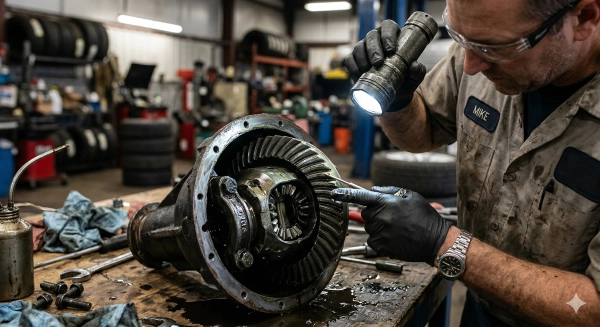
Whine on cruise, gear grind in turns and vague handling all indicate wear. Driveline, for example, proper oil level and grade protects bearings and gears. Leaks at the cover or pinion seal, or metal shavings in the fluid require servicing soon.
Axle Shafts
Axle shafts transport torque from the differential to the wheels. In front-wheel drive, constant velocity axles handle this task via a shorter route.
Pops when cornering, constant shake at velocity, and weird tread indicate damage or bend. About: Your Driveline – A bent shaft ruins stability and brake feel. Check boots and seals for rips or leaks to keep dirt out and grease in.
Spotting Driveline Problems
Initial inspections maintain affordability and security. Monitor for subtle changes in feel or noise, and then record when, where, and how they manifest. A short checklist helps: note vibrations at set speeds, noises on throttle or coast, steering feel in tight turns, shudder on takeoff, and any fresh fluid under the car. Describe road, load, speed in kilometers per hour, and weather. Little things become big things really quick when neglected.
1. Unusual Vibrations
Driveline vibrations are usually the initial symptom something requires attention. Typical causes comprise imbalanced driveshafts, worn universal joints, bad carrier or wheel bearings, or a driveshaft that is misaligned with the transmission or differential. Suspension parts are important as well, as loose bushings or fatigued shocks allow the driveline to flail around and vibrate.
Vibes that increase with speed typically indicate balance or alignment issues. Those that intensify under load can indicate U-joint wear or pinion angle problems. Do a calm test drive: hold steady speeds at 40, 60, and 90 km/h, then add light hills. Pay attention to where the shake begins and dissipates. Continuous vibration accelerates wear and can cause joint or bearing failure.
2. Strange Noises
Clunking, squeaking, grinding or a steady whine are all commonly associated with driveline issues. A clunk on shift or throttle tip-in can signify U-joint play or loose mounts.
Noise on acceleration can flag gear or bearing wear. A coast whine can indicate differential setup. CV joints and things like that turning on throttle and grinding. Keep tabs if it grows louder or changes pitch from week to week. Neglecting noise increases repair expenses and danger.
3. Turning Difficulties
Binding or resistance in tight, slow turns can indicate differential issues or worn CV joints. Hearing clicking at parking speeds and sensing notchiness in the wheel are also signs. Unequal wheel speeds around a turn scrub tires and stress shafts. Look for torn CV boots, grease sling on inner rims, and leaks around axle seals.
4. Shuddering Acceleration
A shake or jerk on launch indicates driveshaft or joint wear. Excess play breaks smooth power flow. A hard shudder at takeoff frequently indicates a weak carrier bearing or U-joint. See if it gets worse under heavy loads or fast acceleration. Document time, speed, and surface.
5. Leaking Fluids
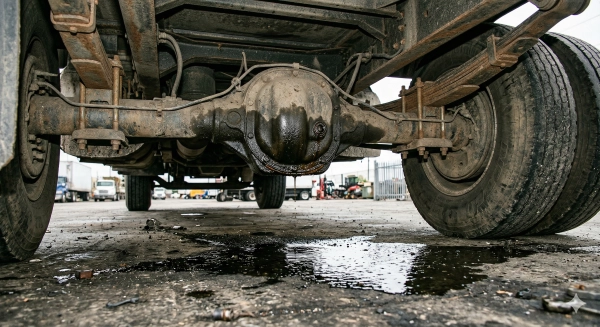
Why Drivelines Fail
Drivelines suck because they move power from the engine to the wheels and failure usually begins small: noise, heat, or vibration, and then escalates into expensive repair. Driveshafts are the core here. A single shaft connects the transmission and differential via universal joints, and on a 4WD or AWD rig, there are two shafts, which increases complexity. Alberta’s rough roads and big temperature swings accelerate wear. Neglecting regular inspections increases the risk of unexpected failure. Monitor service times to maximize life.
- Poor lubrication leads to increased friction and heat, causing joints and gears to wear, and noise starts at low speed.
- Constant overload: Excess mass and bad weight spread strain on shafts, bearings, and gears.
- General wear from mileage, rough roads, and age slowly loosens tolerances.
- Misalignment: Bad angles create vibration that repeats and cracks parts. Driveshaft failure is a safety risk and requires immediate inspection.
Poor Lubrication
Lack of proper lube builds friction and heat, which wears down bearings, U-joints, CV joints and differential gears. Dry U-joints click, squeal or grind, then seize. Differentials howl and overheat.
Use quality lubricants that adhere to the maker’s specifications for viscosity and additives. Check and change fluids on schedule for the gearbox, transfer case, and differentials. Grease serviceable U-joints periodically and replace sealed joints at the initial hint of play or corrosion. Adhere to manufacturer advice on type and interval. Off-road, towing, or high-heat applications typically warrant shorter cycles.
Constant Overload
Loads beyond the rated limit decrease joint life and increase torsional shock. Bearings pit, gears chip, and axle shafts can bend under repeated spikes.
Control cargo mass within the vehicle’s gross limits, and distribute weight over the axle span to prevent high local stress on the driveshaft. For fleets and heavy duty use, implement load tracking, axle scales and driver training to reduce overload occurrences.
General Wear
Normal driving, potholes, and time grind down bearings, splines, joints, and seals. The early warning symptoms typically manifest as vibrations through the floor, clunks on shifts, and then a loss of silky power.
Plan routine inspections: check U-joint play, boot cracks, fluid level and color, and pinion seal leaks. Early part swaps prevent a minor defect from wrecking the entire driveline.
Misalignment
Bad driveline angles or mounts generate dynamic vibration that intensifies with speed and heat. Chassis flex, lift kits, lowered springs, or bad installs are typical culprits.
Check alignment again after collisions, major repairs, or suspension work. If vibration persists after new parts, suspect angles or mounts first.
Driveshafts have different layouts. There are front, rear, and four-wheel drive designs, and front-wheel drive loads front shafts more heavily during hard turns. A worn-out shaft can shake underneath the car and needs to be checked immediately.
Maintain a basic log for fluid changes, joint inspections, and mileage.
The Ripple Effect of Neglect
Small driveline faults almost never remain small. Decay creeps across adjacent components, maintenance costs soar, safety buffers erode, and dependability decreases. A quick checklist and some prompt repairs disrupt this cycle.
Compounding Damage
The chain-rattling unresolved vibrations or clunks are tossing steady shock loads to adjacent components. A dry U-joint shakes a driveshaft, which stresses the center bearing, pinion seal, and differential gears. Heat accumulates, grease decomposes, and backlash festers.
A little bearing play or a cracked CV boot can turn into seized joints, twisted splines, or a snapped shaft. Neglect can cause a ripple effect, with one failure pulling others in its wake, just like uneven tire wear accelerating suspension bushing disintegration. The pattern mirrors road behavior too: one aggressive move can spark another. Research finds that 55% of drivers acknowledge that annoyance from one driver can ripple to another, and just one ignored ‘thanks’ can set the stage for more aggressive driving to come. The energy multiplies.
Track symptoms over time: note speeds where noise starts, how long a vibration lasts, or any fluid spots on the floor. If a hum at 60 is a drone at 40, schedule service before you need a new shaft, carrier, and diff set. Early, targeted fixes reduce scope and parts count, which translates into less labor and fewer surprises. Even the basics, such as rebalancing the shaft, replacing a boot, and topping off correct-grade oil, can halt the progression.
Safety Risks
A driveline failure at speed can lock a wheel, drop a shaft, or whip parts under the floor, all of which can cause loss of control and serious injury. Broken shafts can puncture the chassis or land on the road, causing hazards to others and property damage.
Catch warning signs—shudder on launch, clack on turns, sulfur smells from overheated oil—before they become roadside occurrences. Monthly inspections uncover silent killers, including loose flange bolts, torn mounts and low gear oil. Note how one act changes others: considerate driving tends to beget the same. Eighty-seven percent of surveyed European drivers agreed while aggression breeds risk. Small things count in safety.
Costly Downtime
Unexpected breakdowns cause trips to be stalled, deliveries to be delayed, and work to be disrupted. For fleets and heavies, a shot axle or diff translates to lost slots, fines, and drivers sitting around.
Preventive service—grease points, fluids checks, vibration checks—reduces repair risk and downtime. Schedule repairs into service windows to queue parts, control costs, and preserve uptime. Large systems show how neglect scales harm: the Indian Act of 1876 and forced assimilation policies led to deep, lasting damage, including residential schools, rights restrictions, and unmarked graves, which is proof that ignored harm multiplies. Road behavior echoes this: one kind or harsh act sets the tone for safer or more tense traffic.
Use a driveline lifespan checklist: service dates, fluid specifications, torque values, boot and seal status, play limits, vibration notes, and next actions.
Proactive Driveline Care
Regular maintenance keeps wear at bay, reduces noise and vibration, and decreases the risk of unexpected, expensive malfunctions. Eager Driveline Prevention aims to extend joint, bearing, shaft, and gear life without compromising ride quality or safety.
- Inspect every 3–6 months or per maker guidance
- After harsh use, check for leaks and contamination
- Grease approved points on schedule; replace fluids by spec
- Track vibration and noise; address early
- Keep loads within ratings; distribute weight evenly
- Verify tire condition, pressure, and wheel alignment
- Log all services with dates, fluids, and findings
Inspect Regularly
Keep an eye out for leaks at the differential, transfer case and transmission output. Look over the driveshaft for dents, bends, rust scale, or lost balance weights. Inspect U-joints and CV boots for cracks or grease fling. Proactive Driveline Care includes tightening loose flange bolts and carrier bearing hardware.
As a routine service, check for play in U-joints and CV joints and watch engine, transmission, and differential mounts for tears or sag. Be aware of clunking, clicking, or squeaking on takeoff or turns, as those noises tend to indicate joint or gear wear.
Use a checklist so no areas get skipped: shafts, joints, mounts, seals, fluids, tires, and alignment. Digital vehicle inspections capture these trends over time with photos, torque notes, and vibration reports, making it easier to identify slow shifts.
Reduce intervals if you tow, haul, off-road, or drive in mud, water, or heavy dust.
Lubricate Properly
Use only manufacturer-approved grease and fluids for U-joints, slip yokes, wheel bearings if serviceable, transfer case, and differential. Keep ahead of wear.
Proper lubrication reduces noise and vibration and extends the life of joints and gears. Record each service with the date, product specification, and mileage to maintain a clean record and ensure you don’t miss an interval.
Manage Loads
Observe gross vehicle mass and axle ratings to safeguard gears, shafts, and bearings. Distribute cargo side to side and front to rear to prevent side load on joints and mounts.
Look out for new vibration, pull, or harsh shifts after loading. If behavior changes, recheck balance, tie-down points, and tire pressure.
- Weigh the vehicle when unsure of load mass
- Place dense items low and near the axle centerlines
- Use weight-distributing hitches when towing
- Re-torque suspension and driveline hardware after heavy trips
- Confirm alignment and tire wear after long hauls
The Professional Advantage
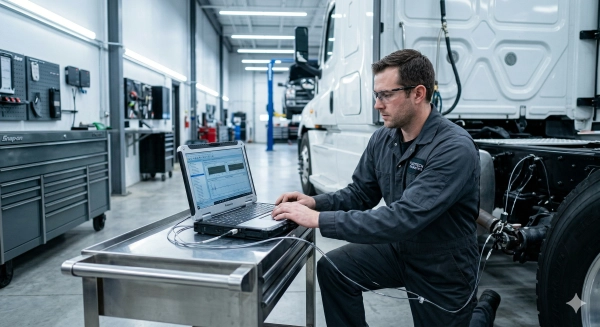
Advanced Diagnostics
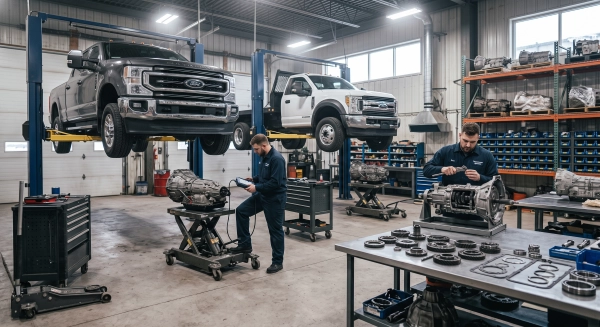
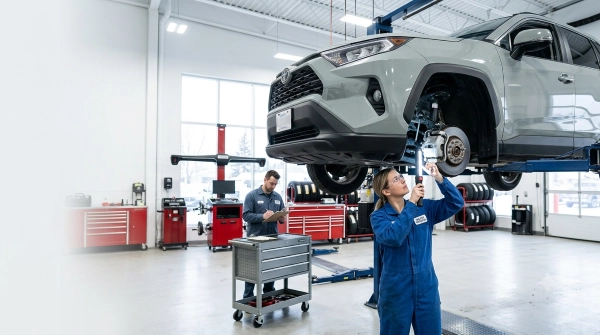
Shops employ chassis ears, tri-axial accelerometers, laser shaft alignment and on-car balancers to detect driveline vibration, imbalance and wear that’s otherwise difficult to identify. Professional Advantage borescope inspection of U-joint caps and pinion seals reveals thermal imaging that highlights hot bearings. These steps quarantine defects before they become widespread.
A good diagnostic flow begins with a road test, then lift checks, runout readings, and fluid analysis. Systematic flow charts eliminate tire cupping, bent flanges, seized slip yokes, or carrier bearing sag. Dynamic tests at 40, 80, and 110 km/h under load expose speed-specific faults you may not otherwise catch in a driveway.
Request a complete driveline evaluation if noise varies with speed, load, or gear, or if vibration peaks at certain road speeds. Stubborn or elusive symptoms require more than a quick spin.
Ongoing education in these tools provides professionals with a competitive edge, enhances productivity, and promotes successful professional trajectories through skills development and robust networks.
Precision Repairs
Good parts and OEM or proven equivalent procedures are important for reliability. Shops track service information for runout limits, U-joint phasing and shaft indexing. Professionally serviced fresh hardware and the right grease and seal driver prevent premature wear.
Right torque steps and alignment on reassembly maintain pinion angle, carrier shims, and flange faces within spec. A degree or two off can cause a two or three times vibration. Professionals calibrate and correct it.
Precision repairs bring balance back and end hum, clunk, or shudder. Once rebuilt, on-road load-spanning validation verifies results. Go with seasoned techs. Secure, thorough work results from experience, premeditation and the flexibility to shift when a covert defect emerges.
These habits — clear plans, goal setting, and solid communication with clients — foster confidence and a permanent professional advantage.
Expert Advice
Talk preventive care specific to your vehicle and duty cycle. Light city use is not the same as heavy towing.
Inquire about inspection intervals, lube points, and load limits for U-joints, center bearings, and CVs. Basic inspections help avoid costly repairs.
Focused direction lengthens lifespan and stabilizes output. Schedule a driveline inspection with Hart Transmission and Mechanical for reassurance now.
Conclusion
To close on a broader note, driveline maintenance rewards. Clear signs point to real issues: sharp clunks at launch, high pitch whine at speed, or shake under load. Little fixes beat big bills. New fluid, tight bolts and fast inspections prevent wear and heat. A simple road test helps: coast, brake light, light turns in a lot. Notice any change in sound or feel. That tip saves time.
For high miles or hard use, schedule a shop inspection every 20,000 km. Request a lift inspection, fluid condition, joint movement, and mount wear. A good tech will show you the parts and the plan. This leads to fewer unexpected things. Here’s to more safe miles.
Drive line problems. Not sure how to proceed? Submit your symptoms and budget, and receive a transparent, step-by-step plan.
Frequently Asked Questions
What is a driveline, and why does it matter?
The driveline delivers power from the engine to the wheels. It encompasses the transmission, driveshaft, differentials, CV joints, and axles. A good driveline provides seamless acceleration, optimal gas mileage, and secure maneuvering. Neglect it and you’ll be R.I.P. To expensive failures!
What are common signs of driveline problems?
Keep an eye out for vibrations under load, clunking when you shift, clicking on turns, shuddering on takeoff, fluid leaks, and burning smells. Tire wear and bad mileage are trouble. If symptoms persist, have them professionally inspected soon.
What causes driveline failures?
Routine suspects are worn universal or CV joints, low or dirty differential or transmission fluid, damaged driveshafts, misaligned components and aggressive driving. Overloading and skipping maintenance accelerate wear. Early checks for driveline problems prevent major failures.
Can I drive with a bad driveline?
It’s dangerous. Small vibrations can become big damage, fast. A driveline problem can break and cause loss of control. Cut back on driving and have it inspected pronto. Towing is safer in cases where noise or vibration is severe.
How do I prevent driveline issues?
Respect service intervals. Replace fluids on schedule. Check CV boots, U-joints, and mounts. Keep tires matched and balanced. Steer clear of overloading and hard launches. Repair leaks early. A quick driveline inspection during service can save you costly repair bills down the road.
How much does driveline repair cost?
Prices depend on part and vehicle. Replacing a U-joint or CV axle is typically moderate. Driveshaft, differential, or transmission repairs can be steeper. Routine care and quick diagnosis bring down overall cost. Request a written estimate and parts warranty.
When should I see a professional?
Consult a mechanic if you sense constant vibration, hear clunks or clicks, spot leaks, or notice warning lights. Following off-roading, towing, or road debris impacts, our certified technicians can test, diagnose, and fix problems before they get worse.
Need help keeping your truck or fleet road-ready? Browse Hart Transmission and Mechanical’s service resources for professional repairs, diagnostics, and preventative maintenance.
Fleet Service and Preventive Maintenance
For more information about heavy-duty trailers, vehicle inspections, and road safety standards, check out the authoritative resources below.