- Key Takeaways
- The Alberta Road Gauntlet
- What Your Vehicle Feels
- Beyond the Bumps
- Why Alberta Suspension Repair Differs
- Proactive Vehicle Protection
- When to Seek Professional Help
- Conclusion
- Frequently Asked Questions
- What makes Alberta suspension repair unique?
- How do I know my suspension needs repair?
- How often should I inspect my suspension in Alberta?
- What parts wear out fastest on Alberta roads?
- Can alignment issues damage my suspension?
- Is it safe to drive with worn shocks or struts?
- What maintenance helps prevent costly suspension repairs?
Key Takeaways
- Alberta’s rough roads and freeze-thaw cycles put a lot of stress on suspension components, making timely inspections and repairs even more crucial. Schedule after winter and spring checks to catch hidden damage early.
- Be on the lookout for warning signs such as bouncing, drifting, uneven tire wear and nose dives when braking. Ignoring these symptoms compromises safety, handling and braking performance.
- Change your driving habits to save suspension on potholes, frost heaves, and gravel roads. Be easy on the bumps, leave some room, and don’t overload. It’s tough on your shocks and struts.
- Maintain tires at manufacturer recommended pressure for optimal handling balance and suspension wear. Check pressure monthly and before long trips with a trusted gauge.
- Select climate-ready parts and Alberta-experienced technicians for lasting, precise repairs. Make certain that your shop uses quality, locally appropriate components and up-to-date diagnostics.
- Professional help after big hits or ongoing handling problems for a thorough check. Call Hart Transmission & Mechanical for inspection, maintenance and repair built for Alberta driving.
Alberta suspension repair involves the inspection, servicing and swapping of your vehicle’s suspension components anywhere across Alberta, such as shocks, struts, springs, control arms and bushings. Motorists typically search for repair because of uneven tire wear, clunks going over bumps, questionable handling, or a drop in ride height. Shops in big cities like Calgary and Edmonton utilize lift inspections, road tests and wheel alignment checks to locate worn parts and adjust to factory specs. Popular services include strut assemblies, sway bar links, ball joints and four-wheel alignment. Prices vary by part and labor time, with alignments frequently requiring thirty to sixty minutes and full strut jobs two to four hours. To plan accordingly, the following sections demystify symptoms, diagnostics, average prices, and timelines.
The Alberta Road Gauntlet
Alberta’s signature combination of potholes, frost heaves, gravel stretches and jagged curb edges puts constant stress on shocks, struts, bushings and control arms. The weather is changeable, throwing in ice and slush and sudden thaws, so that the roads vary from one day to another. A reliable, well-tuned suspension is essential for traction, stopping power and ride quality along every Edmonton boulevard like Calgary Trail and 101 Avenue, where potholes and curb smashes run rampant.
1. Pothole Season
Potholes result in hard, vertical slams that blow out shock seals, bend rims, crack springs, and stress axles and ball joints. A deep hole at 50 kilometers per hour can knock a wheel out of true in one blow.
Alberta Road Gauntlet or when you need to slow down, keep a longer gap and trace a smooth line where you can. Don’t swerve into traffic or brake hard mid-hole. A steady speed keeps the wheel rolling through.
Look for clunks over bumps, a pull to one side, loose steering on center, and cupped tire wear. If the wheel now sits off-center or the ride is hard, the whack did injury. Schedule a post-winter and post-spring inspection to catch leaks, split bushings, and bent links early before tires are worn.
2. Frost Heaves
Frost heaves are ridges and dips created as ground moisture freezes and lifts pavement, then settles unevenly. That wave action bangs struts, top mounts, tie rods, and alignment angles.
Too much bounce, steering wheel shake, and shimmy at 60 to 80 km/h indicate worn dampers or warped tyres after heave hits. Mark any difference in ride calm or straight-line feel the week following heavy freeze and thaw. In these rotations, arrange for a check of struts, mounts, toe, and camber to maintain stopping distances short on slick surfaces.
3. Gravel Roads
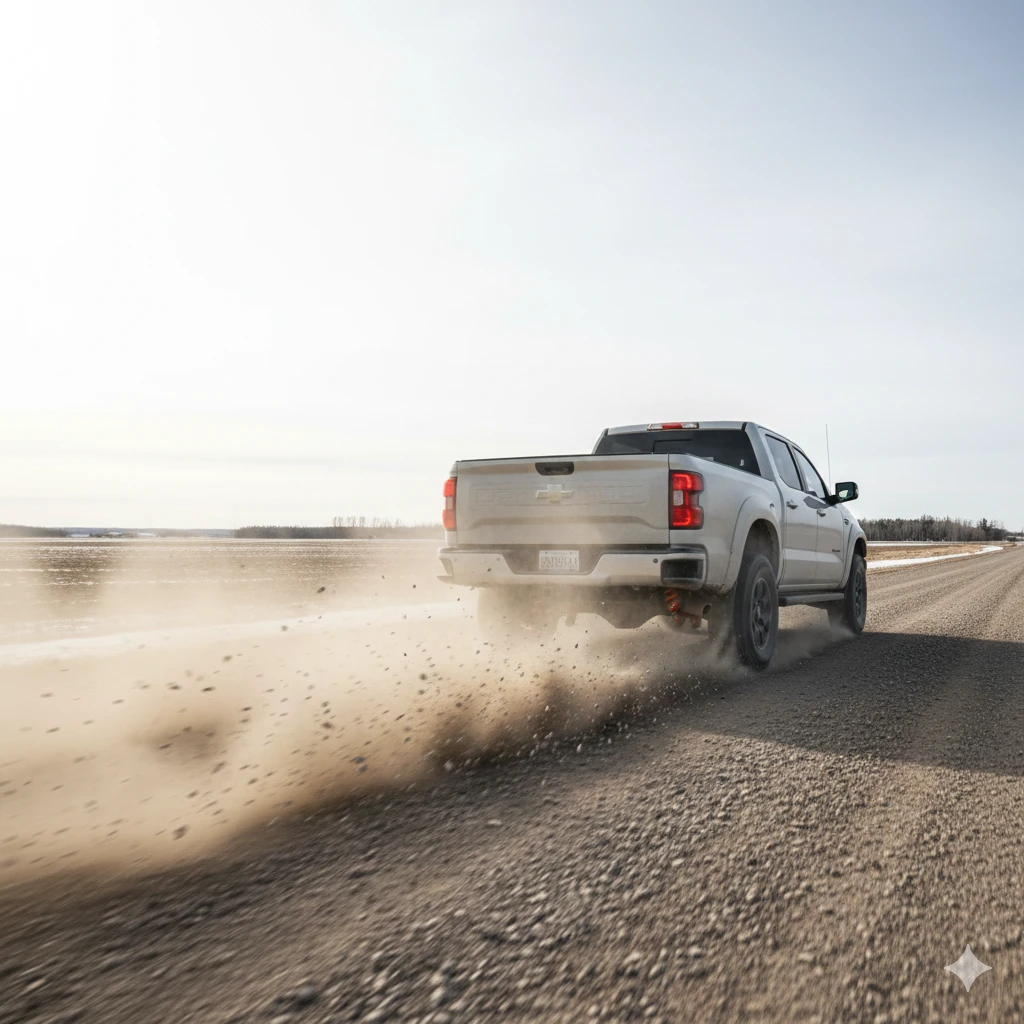
Loose gravel ramps wear on shocks, stabilizer bars, and end links. Dust dries rubber bushings and grit gets caught in joints.
Drop slower and keep less space, it slashes kickback. Flying rocks, soft shoulders, loose marbles in corners, and ruts that snap control arm bushings are just a few of the risks. If you run rural or unpaved routes often, shorten service gaps: check dampers, sway links, and alignment more often and rotate tires sooner to reduce chop.
4. Urban vs. Rural
Urban: Potholes, manhole lips, tramlines, tight turns, and curb strikes skew alignment and chip wheels. Rural: Washboard tracks, deep ruts, and high-speed gravel strain axles, wheel bearings, and chassis mounts.
City driving tends to drift your alignment and chew up inner tire edges. Country back roads increase the chances of twisted A-arms and shock fade on prolonged washboards.
Urban issues vs. Rural issues:
- Urban: misalignment, bent rims, torn sway links.
- Rural: axle seal leaks, cracked bushings, dented skid plates.
Both get full evaluations based on route mix, weather swings, and load.
What Your Vehicle Feels
Suspension wear first manifests in how the car rides and handles. Comfort sinks, control slips, and safety buffers tighten. Tires lose consistent adhesion, stopping distance feels extended, and the steering wheel might not stay true. Alberta’s beat-up roads cause these faults to present themselves earlier, but the same symptoms hold true everywhere.
Bouncing
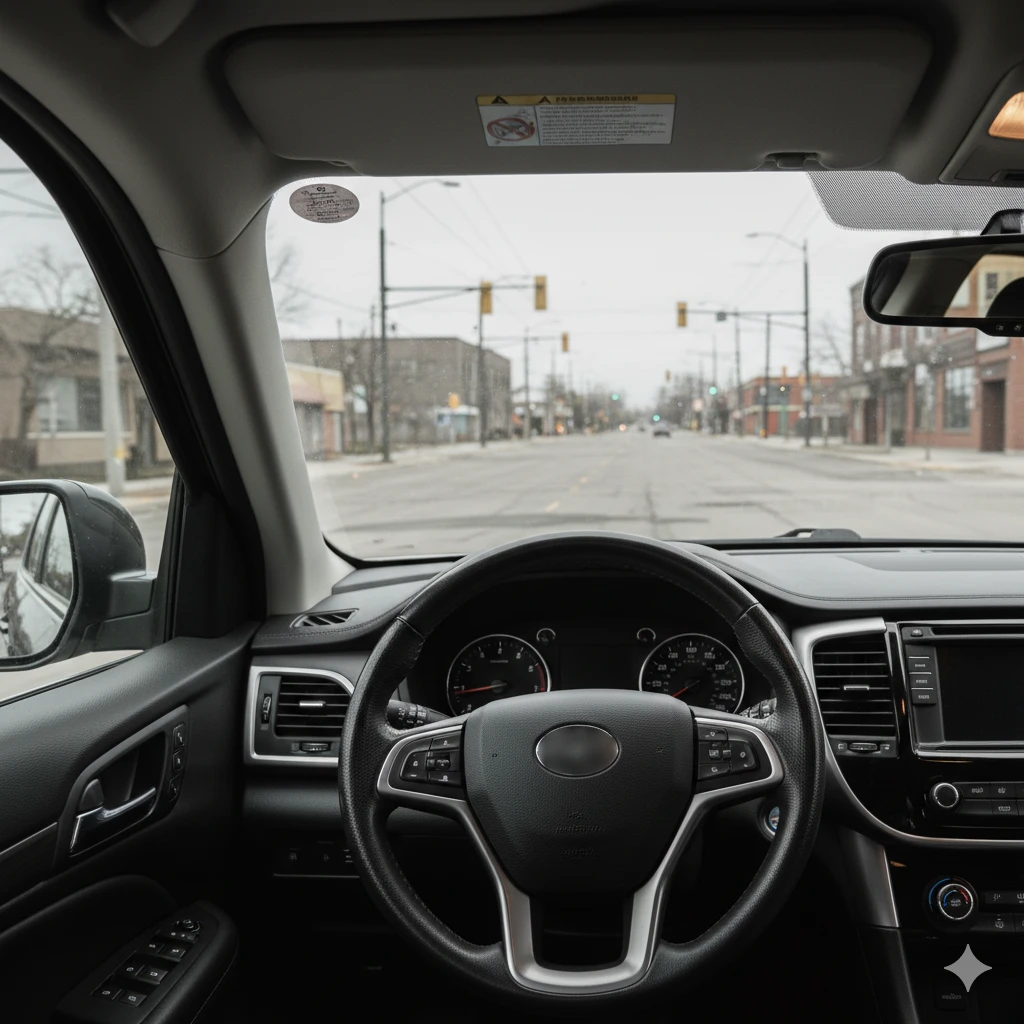
Additional bounce following bumps indicates soft shocks, worn struts, or sagging coil springs that no longer absorb the up-down movement. On uneven pavement, the body can keep bobbing for a few seconds and the cabin feels floaty or loose.
Do a quick check: press down on the hood, release, and count rebounds. Any more than one or two bounces means your dampers are probably shot.
While continuous bounce shortens tire road contact, it reduces traction and causes ABS to fire more frequently on corrugated road surfaces. If the bounce becomes worse, schedule suspension service immediately, as loose damping strains bushings and mounts.
Drifting
Drifting means the car leans to one side, typically caused by bent or misaligned suspension components, worn control arm bushings, or a sticking strut mount. The wheel sits off-center on a straight road, or the car wanders in crosswinds.
This drift increases the danger of control loss and accelerates one-sided tire wear. It makes lane changes tense in rain or snow, since grip is already inconsistent. Be wary of a steering wheel that returns sluggishly, requires constant correction, or has a vague feeling on center, as these indicate geometry or component defects. Get an alignment and full suspension check to bring back steady tracking.
Uneven Tires
Uneven tire wear, such as bald spots, feathering on tread edges, or scalloping, indicates bad alignment or weak shocks that allow the tire to hop. That wear makes the ride harsh and destroys grip in wet corners. Disregard it and you shell out more, faster, for tires and maybe wheels. Check tread once a month, rotate every 8,000 to 10,000 kilometers, and pair rotations with suspension inspections to maintain even wear.
Nose Dives
Nose dive is when the front end dips under braking, an indication the front shocks or struts have lost damping. Stopping distances can increase by as much as 20 percent because weight transfers too early to the front tires and ABS comes on sooner. Sense a twinge for a sharp forward lurch in hard stops or a seesaw at low speed. Worn shocks or struts? Replacing them brings back solid braking, a smoother ride and safer emergency stops.
Beyond the Bumps
Suspension issues affect safety, braking, and steering, not just comfort. Rough roads stress components, and tiny cracks turn to huge breaks when ignored. Don’t maintain your suspension—care for it like it’s crucial for handling, tire wear, and overall vehicle health.
The Safety Risk
A poor suspension increases crash danger by reducing traction and delaying reaction. The system keeps tires glued to the road. When shocks fade or bushings crack, the chassis can pitch and roll in ways the brakes and steering cannot rectify quickly enough.
In quick swerves or on wet, icy, or gravel surfaces, bad shocks and struts can lead to loss of control. A worn shock can contribute up to two meters to stopping distance, which is the equivalent of a compact car in length. That gap counts in actual traffic.
There are tie rods and ball joints that connect the wheels to the steering. Over-steering and uneven tread wear indicate a failing tie rod or worn ball joints. Tie rod specs are tight. Even light bumps or a pothole can shift alignment and cause a pull or a vague wheel.
Safety is reliant on regular suspension inspections. Check shocks and struts for leaks, ride height, play in ball joints and alignment. On smooth roads, shocks bounce approximately 1,050 times per kilometer, so wear is to be expected. Plan shock replacement approximately every six years or 65,000 to 70,000 kilometers.
The Financial Toll
Suspension faults cost money if you ignore them. Bad shocks and struts stress mounts, springs, and control arms and can wreck wheels and axles if a hard punch comes next. Misalignment burns fuel and eats tires, making you replace them early.
Bad damping accelerates brake wear. The car noses down, ABS kicks in more aggressively, and rotors can warp easier. Little shudders today lead to big bills later.
- Tires: premature wear from cupping or feathering, early replacement and alignment.
- Brakes: Pads and rotors are replaced more often due to extra heat cycles.
- Wheels and axles: Pothole hits can crack rims or bend shafts when the suspension cannot absorb the load.
- Steering links: tie rods and ball joints fail sooner. Symptoms are play and clunks!
- Springs and mounts: Sagging springs and torn mounts lead to poor ride height and noise.
- Fuel: Misalignment increases rolling drag and raises fuel spend over time.
Preventative service is cheaper than reactive work. Seal leaks, replace worn joints, align wheels, and rotate tires on time to keep long term costs down.
Why Alberta Suspension Repair Differs
Alberta’s brutal winters, freeze-thaw cycles and coarse gravel roads put suspension components under stresses you won’t find anywhere else. Repairs require climate-ready parts, corrosion control and technicians who know pothole damage, cold-brittle components, frequent highway use, towing and rural/off-road stress. Check out some of the unique challenges and fixes underneath!
| Challenge | Impact on Suspension | Practical Fix |
|---|---|---|
| Deep potholes and debris | Bent control arms, blown shocks, misalignment | HD shocks/struts, reinforced arms, frequent alignments |
| Extreme cold | Brittle bushings, cracked seals | Low-temp elastomers, cold-rated seals |
| Temperature swings | Seal shrink/swell, fluid breakdown | Multi-grade fluids, high-spec seals |
| Road salt and moisture | Corrosion on springs, bolts, subframes | Coatings, anti-seize, rustproof hardware |
| Heavy towing/highway | Faster wear on ball joints and tie rods | Load-rated parts, periodic torque checks |
| Rural/off-road | Higher impact loads | Skid plates, progressive-rate springs, reindexed torsion bars |
Local Parts
Local sourcing means parts built for known road abuse: thicker shock tubes, stiffer bushings, and springs tuned for mixed highway and gravel. These components match fitment Canadian-market trims, so geometry and ride height remain accurate.
Durability gets better when the metallurgy and rubber compounds align with local cold, salt, and dust. Top and bottom ball joints, which tend to wear fast in Alberta, last longer when specified with cold-stable boots and greaseable housings.
Local sources reduce downtime with same-day inventory on arms, links, struts and hardware. That keeps fleet and personal vehicles rolling.
Ask your shop to list part specs: temperature ratings, corrosion coating type, and load class. Tailor parts to your driving style, towing, or country roads.
Climate-Ready
Cold makes bushings hard and brittle. Seals dry out and crack. Fluids thicken. Select shocks and struts rated for sub-zero starts and summer heat, plus boots that remain flexible at −30°C.
Use low-temperature synthetic greases and hydraulic fluids. Nitrile or fluoroelastomer seals resist shrinking in cold and swelling in heat.
Pair springs and mounts with salt-fighting coatings. Tow and go with progressive or heavy-duty springs.
Have them checked every 10,000 to 15,000 km for leaks, torn boots, and corrosion on bolts and perches.
Expert Knowledge
Technicians accustomed to Alberta know the early signs of pothole shock fade, premature ball joint play, and strut tower corrosion. They tailor repairs to highway commuting, worksite loads, or weekend off-road.
Precise diagnosis saves expense. Advanced tools matter. Thermal imaging is used for fluid leaks in cold weather. Dial indicators are used for joint play. Road-force testing is performed after alignment.
Choose shops with proven Alberta suspension work, brand-trained techs, and in-house alignment and corner-weight ability.
Proactive Vehicle Protection
Proactive vehicle protection is taking measures that prevent issues before they begin. Whether it’s suspension systems in Alberta or anywhere that has mixed road and weather conditions, the objective is less shocks to vital components, fewer surprises, and extended service life. Periodic maintenance, such as oil changes, tire rotations, and wheel alignments, keeps the entire vehicle operating in harmony. Some owners opt for additional coverage, such as extended warranties or protection plans for additional budget control. These products can reduce risk but might be regulated in your area. Surface care helps too. Paint films, ceramic coats, rust-proofing, and undercoating can shield components, reduce corrosion, and cut future repair odds.
- Maintain tires at specified pressure and rotate every 8,000 to 10,000 kilometers.
- Slow for potholes, speed bumps, and rail crossings.
- Avoid hard braking and sharp turns on rough roads.
- Don’t overstuff the car. Verify the GVWR.
- Inspect shocks, struts, bushings, and mounts each oil change.
- Book a suspension check yearly or every 20,000 km.
- Fix small leaks, torn boots, or clunks right away.
- A good tire gauge and wheel alignment are important after curb smacks.
- Consider rust-proofing in wet or salted environments.
Driving Habits
Minimize abrupt stops, hard turns, and aggressive inputs on uneven terrain. These spikes in force travel directly to shocks, struts, control arms, and bushings, reducing lifespan.
Decelerate over bumps, potholes, and railroad tracks. Speed mitigates cuts, absorbs energy, and reduces the possibility of bent wheels, blown shocks, or cracked spring seats.
Minimize heavy loads and towing unless your suspension is designed for it. If towing frequently, install load-rated tires or helper springs as recommended by the manufacturer.
Go with established routines. Soft inputs distribute wear more evenly, which makes parts last longer and maintains alignment.
Tire Pressure
Proper tire pressure allows the suspension to do its job. Underinflated tires flex too much and heat up. Overinflated tires transmit additional shock into suspension joints and struts.
Check pressure monthly and before long trips. Use a trusted gauge, measure cold and match the door-jamb label, not the tire sidewall. Small weekly checks bring peace of mind and could save you from uneven wear.
Regular Checks
Book a suspension inspection at least once a year or every 20,000 kilometers, earlier if you drive on rough or salted roads.
Quick visual checklist:
- Uneven tire wear or cupping
- Leaks on shocks/struts
- Cracked or torn bushings/boots
- Sagging ride height
- Steering pull, clunks, or bounce
Expert diagnostics, road test, lift inspection, and alignment report detect play in ball joints, tie rods, and mounts before they become an issue. Small repairs made early are less expensive and prevent the risk of major malfunctions. Insurance and warranties can assist with expenses, and proactive maintenance usually keeps claims smaller.
When to Seek Professional Help
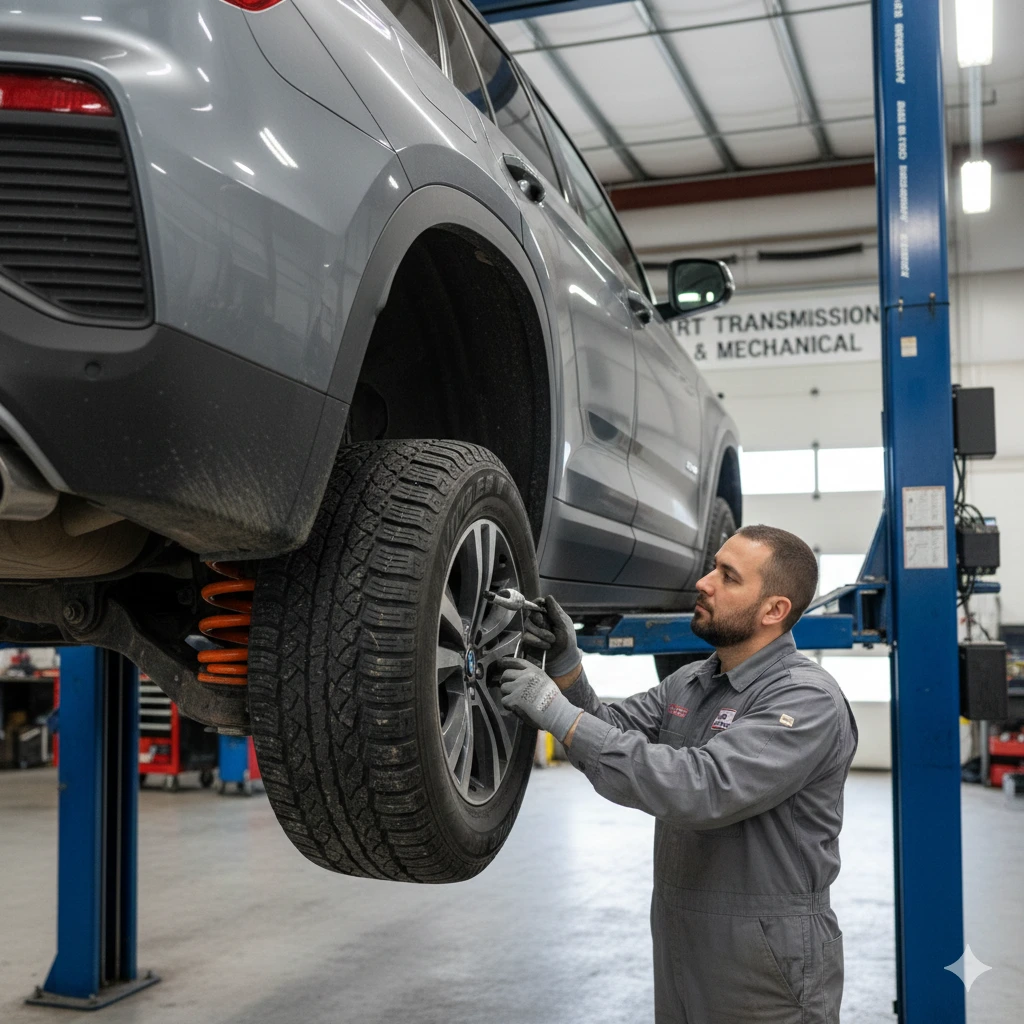
Obvious indicators inform you the suspension requires professional attention. Act quickly when these appear, as unsafe handling, extended stopping distance, and rapid tire wear can ensue.
See a reputable shop if the truck bounces after bumps, drifts in turns or displays uneven tire wear. Cupping or heavy wear on one edge typically indicates a failed shock or an alignment issue that requires pro tools to track down. If the truck pulls to one side or feels less confident on wet or icy roads, that’s a good indication the system isn’t maintaining grip. Wobbly steering or a steady pull indicates that the weight isn’t balanced very well across axles and corners. Uneven sags, particularly on one side, may indicate a broken spring, weak leaf pack or airbag leak. Leaks at fittings or worn air lines can depress one corner and alter ride height. If ride comfort dips or it begins to float, have the dampers inspected and replaced if necessary. All of these can reduce control and increase risk, so don’t delay.
Get a quick suspension inspection following a hard whack, such as a large pothole, curb, or washboard of gravel. Damage can be hidden: bent control arms, cracked bushings, tweaked tie rods, or a shock that now leaks oil. After these kinds of encounters, observe for a fresh shimmy at 60 to 90 km/h, an off-center steering wheel, or a clunk over minor bumps. These are red flags. Any unexpected rough ride requires a swift inspection too because braking distance can increase up to 30 percent in an emergency when the suspension can’t keep the tires grounded.
Professional suspension repair introduces structured tests and quality parts. Expect a road test, ride height checks, shock bounce rate, bushing and joint play with pry-bars, and alignment to specification. For air systems, technicians will pressure-test lines and valves, spray-test for leaks, and scan for height sensor faults. You receive a detailed report with wear limits, pictures, and a prioritized plan by safety, cost, and downtime. Quality shops torque fasteners to specification, use matched parts, and test with a second road test to confirm straight tracking, stable brake feel, and even tire contact.
For drivers in Alberta, visit Hart Transmission & Mechanical for comprehensive suspension inspection, maintenance, and repair.
Conclusion
To end it on that note, Alberta roads are hard. Cold snaps, frost heave, rock chips, and washboard gravel impact your shocks, struts, and bushings. Keep sharp, save cash, and stay safe on the ride.
To spot trouble fast, note the signs: nose dip on brake, float on the highway, one side lean, tire cupping, loose steering, new clunks. Easy inspections assist as well. Check for leaks on struts, torn boots, cracked bushings, worn mounts. Short test drives say a lot. Give it a little speed bump pass, hard brake, and lane change at 60 km/h.
To keep your car dialed in, book a shop that knows Alberta roads. Request a complete inspection, transparent records, and quality components tailored to your vehicle. It is good to get a quote or schedule an inspection today!
Frequently Asked Questions
What makes Alberta suspension repair unique?
Alberta’s freeze-thaw, gravel roads and heavy road salt expedite wear. Bushings, shocks, struts and ball joints receive additional stress. Our local techs know these patterns and use parts and alignments optimized for harsh conditions for results that last.
How do I know my suspension needs repair?
Look out for clunks, uneven tire wear, nose-diving when braking, drifting in crosswinds, or a bouncy ride. Steering vibration and longer stopping distances are warning signs. If you find two or more, schedule an inspection soon.
How often should I inspect my suspension in Alberta?
Check every 12 months or 15,000 km, whichever occurs first. In harder use—daily gravel, towing or winter commuting—check every 6 months. Our early inspections catch worn components before they wreak havoc on tires, brakes, or steering.
What parts wear out fastest on Alberta roads?
Shocks/struts, control arm bushings, sway bar links, tie rods, and ball joints. Road salt attacks coil springs and mounts. Regular cleaning of the undercarriage and timely lubrication slow corrosion and extend service life.
Can alignment issues damage my suspension?
Yes. Misalignment causes excessive tire scrub and adds additional stress to bushings, bearings, and steering components. After pothole hits, curb strikes or suspension work, book a four wheel alignment to safeguard handling and tires.
Is it safe to drive with worn shocks or struts?
Not advised. Stopping distances increase, tires lose contact on rough roads, and stability control operates less optimally. You might observe hydroplaning potential increase in drizzle. Change immediately for safety and tire life.
What maintenance helps prevent costly suspension repairs?
Rotate your tires every 8,000 to 10,000 kilometers, check tire pressures monthly, wash the undercarriage every winter, and have it checked after impact with a pothole. Change out your old tires and bushings sooner. Timely alignments and quality parts lower long-term costs and enhance ride comfort.
Not what you were looking for? Explore Hart Transmission’s top resources for professional diagnostics and repair.
Fleet Services and Preventive Maintenance
Here are other additional resources you can explore:
Alberta Highway Maintenance Services